Eviction of Afghan King’s Descendants from Kabul House Dehradun: A Legal and Humanitarian Crisis
The sealing of Kabul House in Dehradun has led to the eviction of the descendants of an exiled 19th-century Afghan king, sparking a complex legal debate and a humanitarian crisis.
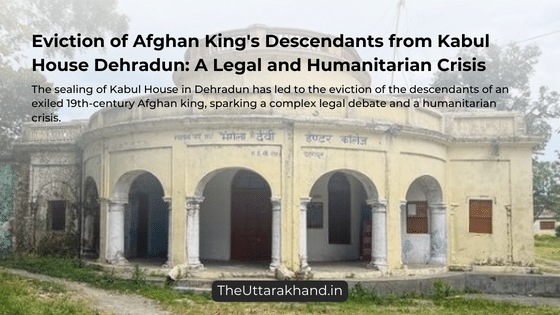
Eviction of Afghan King's Descendants from Kabul House: A Legal and Humanitarian Crisis in Dehradun
The sealing of Kabul House in Dehradun has led to the eviction of the descendants of an exiled 19th-century Afghan king, sparking a complex legal debate and a humanitarian crisis.
The case of Kabul House in Dehradun represents a complex legal and humanitarian issue, rooted in the historical context of colonialism, national partition, and modern property laws.
The descendants of Mohammad Yaqub Khan, a 19th-century Afghan king exiled to India, find themselves at the crux of property disputes and the definition of “enemy property.”
The sealing and subsequent eviction of the 16 families, affecting 200-300 people, from Kabul House by the Dehradun authorities is the culmination of a 40-year-long legal battle.
The property was tagged as “enemy property” since some descendants moved to Pakistan post-Partition, yet those who remained argue their continuous residence. This eviction not only displaces individuals with a century-old connection to the site but also raises questions about historical ownership and rights of descendants who did not migrate.
The legal determination seems to disregard the nuanced reality of the families’ lived experiences and their claims of uninterrupted habitation. The court’s recent evacuation order, with a brief notice period, exacerbates the situation by leaving little time for the families to secure alternative housing.
This incident underscores the lingering aftermath of historical events like the Second Anglo-Afghan War and the Partition of India on contemporary lives. The complexities involved in such a case demand a thorough examination of historical rights, legal frameworks, and the humanitarian implications of strictly enforcing property laws without accommodating the unique circumstances of individuals involved.