
Haridwar Name Origin : meanings behind its name
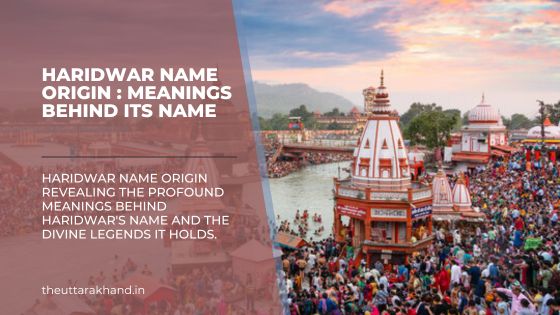
Haridwar Name Origin : meanings behind its name
Haridwar name origin
Haridwar name origin : Haridwar, located in the foothills of Shivalik ranges in the state of Uttarakhand, is one of the holiest cities in India. This ancient city is situated along the banks of the River Ganges and finds mention in several ancient Hindu scriptures. Haridwar has been a major Hindu pilgrimage destination for centuries and hosts the iconic Kumbh Mela every 12 years.
The city is known by many names like Gangadwára, Gateway of the Gods, Hardwar, Hari-ka-Pheri, Haridwara etc. But the most popular name is Haridwar, which is made up of two words – ‘Hari’ referring to Lord Vishnu and ‘Dwar’ meaning gateway. Thus, Haridwar stands for ‘Gateway to Lord Hari (Vishnu)’.
In this article, we trace the legends behind the origin of the name Haridwar, the history of the city as a pilgrimage destination and the multiple meanings associated with this holy city.
The Legend of King Bhagirath and the Descent of River Ganges
Haridwar name origin : According to Hindu mythology, during the Satyug, there lived a noble king named Bhagirath who ruled over the kingdom of Kosala. He was a descendant of the famous King Sagara of the Suryavanshi dynasty. King Sagara had 60,000 sons who were burnt to ashes by the angry sage Kapila as they disturbed his meditation. King Bhagirath wanted to bring down River Ganges from the heavens so that the water could purify the ashes of his ancestors and grant them salvation.
After performing severe penance for many years, Bhagirath was able to please Lord Brahma and Goddess Ganga. Brahma asked Ganga to descend to earth, but Ganga felt that the force of her descent would split the earth. To break her fall, Lord Shiva agreed to receive Ganga in his thick matted locks. King Bhagirath led Ganga to the ashes of his ancestors which were lying at Mukti Sthal at Haridwar. The purifying waters of Ganga granted salvation to Bhagirath’s ancestors. This legend is the reason why Haridwar is also known as Gangadwára (Gateway of River Ganga).
Haridwar as the Gateway to the Gods
The descent of River Ganges transformed Haridwar into a major Hindu pilgrimage centre. The holy river became the focal point where millions of devotees gather to take a dip in its waters to wash away their sins. It is believed that taking a dip in the Ganges during Kumbh turns the water into Amrit (nectar of immortality). The sacred river grants Moksha or salvation to people after their death.
Thus, Haridwar became the gateway where mortal souls could attain immortality and reach the realm of the gods. The city became the doorway from the earth to the heavens above, aptly earning the moniker ‘Gateway to the Gods’. The diverse temples and ghats built across Haridwar strengthened its position as a Tirtha Kshetra or holy pilgrimage destination.
Haridwar name origin : The City of Lord Hari (Vishnu)
Haridwar name origin : The most popular legend behind the name Haridwar relates to the presence of Lord Vishnu and his footprint. It is said that Lord Vishnu placed his footprint on a stone that is set in the upper wall of Har Ki Pauri where the Ganges touches it all the time. Devout believers feel that taking a dip at Har Ki Pauri will lead them to salvation and the realm of Lord Vishnu.
The main shrine of Haridwar is dedicated to Lord Vishnu and is known as Hari-ka-Pheri. Since the city is the sacred abode of Lord Hari (Vishnu), it became renowned as Hardwar or Haridwar – the city of Lord Hari. The name also signifies that Haridwar is where Lord Hari lives with his procession (Pheri).
The Dual Names – Hardwar and Haridwar
The name Haridwar has an intriguing duality with both Hardwar and Haridwar being used interchangeably to refer to this holy city. As per Hindu religious beliefs, the supreme God is manifested in two forms – Lord Shiva and Lord Vishnu who represent the hard and soft aspects of divinity. The followers of Lord Shiva pronounce this city as Hardwar while the followers of Lord Vishnu call it Haridwar.
Thus, Hardwar highlights the fierce and ascetic form of Lord Shiva who is the deity of renunciation. On the other hand, Haridwar brings forth the loving and charming form of Lord Vishnu who is the deity of enjoyment. Haridwar satisfies the spiritual needs of devotees belonging to both Shaivism and Vaishnavism sects, leading to the twin names for this ancient city.
Haridwar as the Home of Dharma
Haridwar name origin : In the famous Hindu epic Mahabharata, Haridwar finds a mention as a place where Dharma Devta (God of Righteousness) once resided. The Pandavas visited Haridwar during their exile and Yudhishtira, the eldest Pandava, is believed to have taken guidance from the Dharma Devta on morality and ethics.
To commemorate this legend, a temple dedicated to Dharma Devta exists in Haridwar till date near the sacred Ganges. The temple draws devotees who seek blessings to follow the path of righteousness. They also visit this temple to resolve disputes and moral dilemmas in their lives.
Conclusion to Haridwar name origin
Haridwar name origin : From its mythical origins in Satyug to being the site of the iconic Kumbh Melas in the modern age, Haridwar has remained a pivotal destination for Hindu pilgrimage for thousands of years. The ancient city has rightfully earned the moniker of ‘Gateway to Gods’ owing to the sacred River Ganges that flows through this revered land. Whether it is known as Hardwar or Haridwar, Gangadwára or Gateway of the Gods, this holy city continues to capture the imagination of millions as a place to attain salvation and reach the realm of the divine.
The name Haridwar beautifully captures the essence of this city as the dwelling place of Lord Hari (Vishnu) and the doorway to the gods in the heavens. The legend, history and deep spiritual significance associated with Haridwar establishes it as one of the holiest spots for Hindus across the world.








Very informative
Thank you