History of Terai-Bhabar Uttarakhand
History of Terai-Bhabar Uttarakhand
History of Terai-Bhabar Uttarakhand
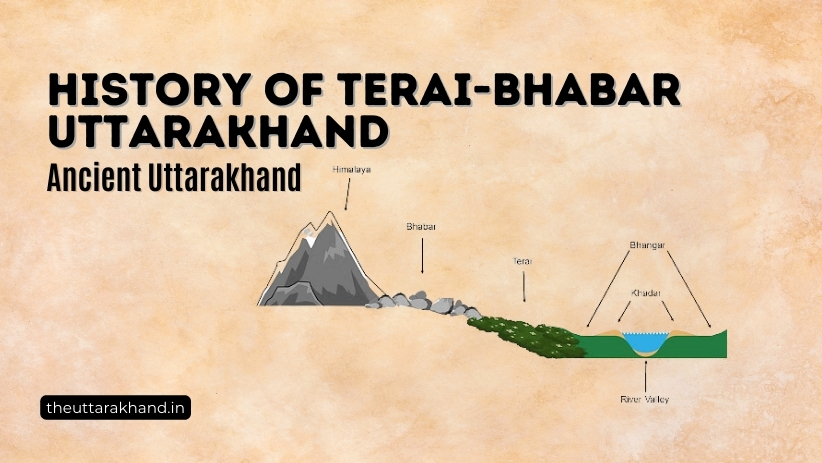
History of Terai-Bhabar Uttarakhand : The Terai-Bhabar region lies at the foothills of the Himalayas in the Indian states of Uttarakhand, Uttar Pradesh and Bihar. It has had a rich and varied history, being located at the crossroads of major trade routes and empires in ancient and medieval India.
Some key points about the Terai-Bhabar region:
- Fertile plains formed by rivers flowing down from Himalayas
- Dense forests historically inhabited by wildlife and indigenous tribes
- Formed buffer between plains and mountains, difficult to cross
- Site of ancient trade routes and pilgrimage paths
- Coveted by empires for agricultural revenue and control over trade
- Saw invasions and migrations over the centuries
In this article, we trace the major historical developments in the Terai-Bhabar region from ancient times to the modern era.
Ancient Period
The ancient history of the Terai plains is not well documented. However, archaeological evidence indicates it was inhabited since prehistoric times.
Some key developments:
- Neolithic sites: Tools and pottery fragments indicate early farming settlements
- Megalithic culture: Burial sites with iron artifacts point to population inflow from Gangetic plains around 1000 BCE
- Mauryan empire: Tarai was likely under Mauryan control during Ashoka’s rule in 3rd century BCE
- Gupta period: Gupta coins found in Tarai indicate trade links and possible imperial control
So the Terai plains saw gradual in-migration and state formation under North Indian empires during the ancient period. But the dense forests kept large scale settlement at bay.
Medieval Period
The medieval period saw major changes in the Terai-Bhabar region:
Khasas, Kol and Kirata Migrations
From 6th to 12th centuries, tribal populations like the Khasas, Kols and Kiratas migrated from the Himalayas into the Terai-Bhabar area in waves. These tribes cleared forests for agriculture and changed the demography of the region.
Muslim Invasions
Starting in the early 11th century, Turkic and Afghan armies made frequent incursions into northern India across the Terai plains. Key invasions included:
- Mahmud of Ghazni: Invaded and plundered the wealthy plains cities multiple times between 1001-1027 CE via the Himalayan foothills.
- Muhammad Ghori: Used Terai route for his decisive victories over the Rajput kingdoms (1192-1202 CE)
- Tughlaq empire: Established outposts in Tarai towns like Champawat and Suan (1325-1351 CE)
These invasions caused major population displacements and unrest in the Terai plains.
Rise of Hill Kingdoms
The disturbed conditions led the Khasa chieftains in Kumaon-Garhwal Himalayas to rapidly consolidate power and establish small hill kingdoms from late 12th to 14th centuries CE. These included:
- Chand kingdom in Kumaon
- Panwar kingdom in Garhwal
- Smaller hill states like Sira, Sora, Bhota, Darma, Doti etc.
The fledgling hill kingdoms started expanding into the Terai foothills, leading to clashes with the Delhi Sultanate.
Tughlaq-Hill Kingdom Conflicts
In the 14-15th centuries, the Tughlaq empire tried to subjugate the Kumaon-Garhwal hill kingdoms to control the mountain passes and trade routes. This led to prolonged conflict, including:
- Haripala Deva: The Kumaon king successfully resisted Tughlaq forces
- Ajay Pal: Defeated by Firoz Shah Tughlaq but regained his kingdom later
By the mid-15th century, the hill kingdoms emerged as strong powers controlling the strategic Tarai plains.
Mughal Period
After the decline of the Delhi Sultanate, the Mughal Empire took control of the Gangetic plains. But their authority over the Terai-Bhabar and Kumaon-Garhwal regions remained nominal. Some key developments:
- Akbar’s campaigns: Successfully invaded and placed Garhwal-Kumaon under Mughal control for some time
- Rebellions: Frequent rebellions by hill chieftains against Mughal authority in the 16th-17th centuries
- Rohilla chieftains: Mughals granted the Tarai plains of Rohilkhand to Afghan chiefs who founded Bareilly city and ruled independently
- Weak Mughal hold: By early 18th century the Mughals lost effective authority over the hill kingdoms and Tarai plains
So while the Mughals tried to dominate the strategically vital Tarai-Bhabar, they achieved only temporary and nominal control marked by constant unrest.
Gurkha Conquests
Taking advantage of the weakening Mughals, the ambitious Gurkha kingdom of Nepal invaded Kumaon-Garhwal and the Tarai plains between 1790-1815 CE. Some major events:
- Almora, Garhwal annexed: Large parts of Kumaon and Garhwal hill kingdoms occupied by the Gurkha army
- Tarai annexed: Gurkhas conquered Gorakhpur, Dehradun, Rohilkhand Tarai areas
- Anglo-Gurkha war: The British defeated Nepal and forced them to cede Kumaon-Garhwal and Tarai to the East India Company (1814-1816)
So early 19th century saw a brief but brutal Gurkha rule over the Tarai plains and adjoining hill regions before the British takeover.
British Period
After the Anglo-Gurkha war, the British controlled the Tarai Bhabar as part of the Ceded and Conquered Provinces. Some key developments:
- Forest settlement: British demarcated the dense Tarai-Bhabar forests for timber export and railways
- Canal colonies: New agricultural settlements established along canal networks for peasants from the hills and Rohilkhand region
- Tea estates: Large scale tea plantations developed in the Tarai foothills of Kumaon-Garhwal for export markets
- Strategic roads: Constructed roads and rail links through the Tarai plains for trade and military access to the hills
So the British tapped the Tarai’s agricultural and forest wealth, settled migrants from the impoverished hills, and developed strategic infrastructure in the region.
Post Independence
After India’s independence, the Tarai-Bhabar region was split across UP, Uttarakhand and Bihar states. Some salient developments:
- Deforestation: Large scale clearance of Tarai forests for agriculture and settlements after the 1950s
- Sugarcane economy: Mechanized sugarcane farming transforms Tarai plains into India’s sugar bowl
- New cities: Fast growth of towns like Haldwani, Rudrapur, Kashipur due to trade economy and migration
- Separatist movement: Demand for separate Uttarakhand state fueled by perceptions of hill-plains divide
So in the modern period, the Tarai has seen accelerating resource use, demographic pressures and livelihood concerns despite overall rising prosperity.
The region remains strategically vital as the bridge linking the northern hills to the great Gangetic plains.
Conclusion to History of Terai-Bhabar Uttarakhand
History of Terai-Bhabar Uttarakhand : In this detailed overview, we have traced the major historical developments in the Tarai-Bhabar – from ancient migrations to medieval empire building, the rise of hill states, Mughal-Gurkha struggles and finally British colonization and modern transformations.
Strategically located between the great Himalayan wall and the North Indian plains, the Tarai-Bhabar has been shaped by the interplay of geography, commerce and power – making it a fascinating microcosm of Indian history in the shadow of the mountains.
FAQs on History of Terai-Bhabar Uttarakhand :
What is the Tarai-Bhabar region?
The Tarai plains and Bhabar foothills located at the base of the Himalayas in parts of UP, Uttarakhand and Bihar.
Why is the region historically important?
It has been vital for trade routes and state expansion due to its location between mountains and plains.
Who ruled over Tarai-Bhabar in medieval times?
The region saw struggles between regional hill kingdoms, Delhi Sultanate, Mughals and Nepali Gurkhas.
What changes occurred under the British?
Large scale forest settlements, canal colonies and tea plantations were developed by the British.