History of Uttarakhand Caste System
History of Uttarakhand Caste System
Introduction to History of Uttarakhand Caste System
History of Uttarakhand Caste System : Uttarakhand, a state in northern India, is known for its scenic beauty, pilgrimage sites, and diverse culture. However, like many other regions in India, Uttarakhand has a complex caste system that has evolved over centuries. The caste system is deeply rooted in the state’s history and has played a significant role in shaping its social structure. In this article, we will explore the historical background of tribes in Uttarakhand and the introduction of the caste system in the region.
Historical Background of Tribes in Uttarakhand
Uttarakhand’s history dates back to ancient times, with evidence of human settlements dating back to the Paleolithic era. The region has been home to various tribes and indigenous communities, each with its unique culture and traditions. The historical background of tribes in Uttarakhand can be traced back to the following:
- Kol Tribe: The Kol tribe is considered one of the oldest tribes in Uttarakhand. They are mentioned in ancient texts like the Vedas, Ramayana, and Mahabharata. The Kol tribe played a significant role in shaping the region’s culture and traditions.
- Kirat Tribe: The Kirat tribe is another ancient tribe in Uttarakhand, with a rich history and cultural heritage. They are mentioned in various ancient texts and have been an integral part of the region’s social fabric.
- Khas Tribe: The Khas tribe is one of the most prominent tribes in Uttarakhand. They have a long history dating back to the 8th century and have played a significant role in shaping the region’s social and political landscape.
The tribes in Uttarakhand have contributed significantly to the state’s cultural and historical heritage. They have maintained their unique identity and traditions despite numerous challenges and external influences.
Introduction of the History of Uttarakhand Caste System
History of Uttarakhand Caste System, like in other parts of India, has its roots in the ancient Vedic period. The caste system was initially based on the division of labor and was designed to maintain social order. Over time, the caste system became more rigid and hierarchical, with Brahmins at the top and Dalits at the bottom.
The introduction of the caste system in Uttarakhand can be attributed to various factors, including:
- Arrival of Adi Shankaracharya: Adi Shankaracharya, a prominent Hindu philosopher, arrived in Uttarakhand in the 8th century to revive Hinduism. His teachings and philosophy had a profound impact on the region’s social structure, leading to the establishment of the caste system.
- Influence of neighboring regions: The caste system in Uttarakhand was also influenced by neighboring regions, such as Rajasthan and Punjab, where caste-based hierarchies were prevalent.
- Arrival of Rajputs: The arrival of Rajputs in Uttarakhand in the 12th century further solidified the caste system in the region. The Rajputs were a warrior class and played a significant role in shaping the region’s political landscape.
The caste system in Uttarakhand has evolved over time, with the emergence of new castes and the transformation of existing ones. Today, the caste system continues to play a significant role in Uttarakhand’s social, political, and economic landscape.
Arrival of Adi Shankaracharya and the Influence on Society
Adi Shankaracharya, a prominent Hindu philosopher, arrived in Uttarakhand in the 8th century to revive Hinduism. His teachings and philosophy had a profound impact on the region’s social structure, leading to the establishment of the caste system. Shankaracharya’s philosophy, known as Advaita Vedanta, emphasized the unity of the individual soul (Atman) with the universal soul (Brahman). This philosophy challenged the caste hierarchy and promoted the idea of equality among all human beings.
Shankaracharya’s influence on Uttarakhand’s society can be attributed to the following factors:
- Establishment of monasteries: Shankaracharya established four monasteries (Mathas) in India, including the Jyotir Math in Uttarakhand. These monasteries played a crucial role in spreading his teachings and philosophy across the region.
- Promotion of Advaita Vedanta: Shankaracharya’s philosophy of Advaita Vedanta challenged the caste hierarchy and promoted the idea of equality among all human beings. This philosophy had a significant impact on Uttarakhand’s society and contributed to the establishment of the caste system.
- Revival of Hinduism: Shankaracharya’s arrival in Uttarakhand coincided with the decline of Buddhism in the region. His teachings and philosophy helped revive Hinduism and played a significant role in shaping the region’s religious landscape.
Caste System in Garhwal and Kumaon Regions
History of Uttarakhand Caste System has evolved over time, with the emergence of new castes and the transformation of existing ones. The Garhwal and Kumaon regions have distinct caste systems, shaped by their unique historical and cultural backgrounds.
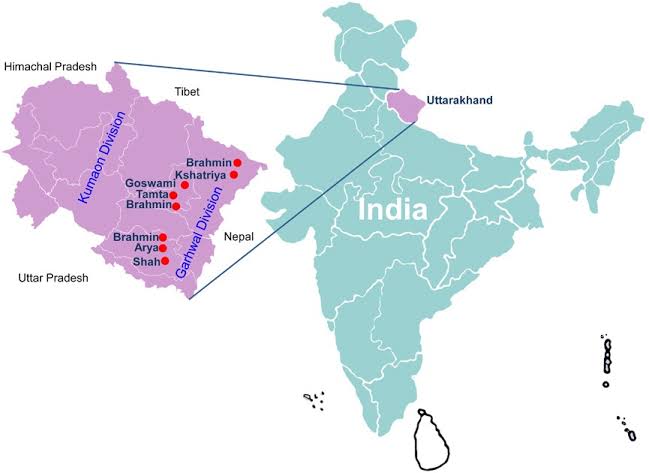
- Garhwal Region: The Garhwal region has a complex caste system, with Brahmins, Rajputs, and other castes playing significant roles in shaping the region’s social structure. The Garhwal region is known for its strong Rajput influence, with Rajputs occupying a dominant position in the caste hierarchy. The region also has a significant presence of Brahmins, who played a crucial role in maintaining the caste system.
- Kumaon Region: The Kumaon region has a more egalitarian caste system compared to the Garhwal region. The Kumaon region is known for its strong presence of indigenous communities, such as the Khas and Tharu tribes. The Khas tribe, in particular, has played a significant role in shaping the region’s social and political landscape. The Kumaon region also has a strong presence of Brahmins, who played a crucial role in maintaining the caste system.
The caste system in Garhwal and Kumaon regions has evolved over time, with the emergence of new castes and the transformation of existing ones. Today, the caste system continues to play a significant role in Uttarakhand’s social, political, and economic landscape.
Sarola and Ganga Brahmin Castes
The Brahmin caste in Uttarakhand is divided into two main sub-castes: Sarola and Ganga. The Sarola and Ganga Brahmin castes have distinct cultural and social backgrounds, shaped by their unique historical and geographical locations.
- Sarola Brahmin caste: The Sarola Brahmin caste is primarily found in the Garhwal region of Uttarakhand. The Sarola Brahmins are known for their strict adherence to the Vedic tradition and their expertise in performing Vedic rituals and ceremonies. The Sarola Brahmins are considered to be of higher status than the Ganga Brahmins, primarily due to their proximity to the Garhwal royal family.
- Ganga Brahmin caste: The Ganga Brahmin caste is primarily found in the Kumaon region of Uttarakhand. The Ganga Brahmins are known for their expertise in performing rituals related to river worship, particularly the worship of the Ganges River. The Ganga Brahmins are considered to be of lower status than the Sarola Brahmins, primarily due to their association with the river and their lack of proximity to the Garhwal royal family.
The Sarola and Ganga Brahmin castes have distinct cultural and social backgrounds, shaped by their unique historical and geographical locations. The caste system in Uttarakhand is deeply rooted in the social hierarchy and continues to play a significant role in the state’s social, political, and economic landscape.
Gaud Caste and Its Origin
The Gaud caste is one of the oldest and most prominent castes in Uttarakhand. The Gaud caste has its origins in the Gaud Brahmin caste, which is primarily found in the eastern part of India. The Gaud caste in Uttarakhand has a distinct cultural and social background, shaped by their unique historical and geographical locations.
- Historical background: The Gaud caste has a rich history dating back to ancient times. The Gaud caste is mentioned in various ancient texts, including the Vedas, Ramayana, and Mahabharata. The Gaud caste played a significant role in shaping the region’s cultural and historical heritage.
- Cultural and social background: The Gaud caste is known for its expertise in performing Vedic rituals and ceremonies. The Gaud caste is also known for their association with the Ganges River and their expertise in performing rituals related to river worship. The Gaud caste has a distinct cultural and social background, shaped by their unique historical and geographical locations.
The Gaud caste has a rich history and a distinct cultural and social background, shaped by their unique historical and geographical locations. The caste system in Uttarakhand is deeply rooted in the social hierarchy and continues to play a significant role in the state’s social, political, and economic landscape.
Pujari Caste and Its Arrival in Uttarakhand
The Pujari caste is one of the most prominent castes in Uttarakhand. The Pujari caste is primarily associated with the performance of religious rituals and ceremonies in temples and other religious institutions. The Pujari caste has a distinct cultural and social background, shaped by their unique historical and geographical locations.
- Historical background: The Pujari caste has its origins in ancient India. The Pujari caste was primarily associated with the performance of religious rituals and ceremonies in temples and other religious institutions. The Pujari caste played a significant role in shaping the region’s cultural and historical heritage.
- Cultural and social background: The Pujari caste is known for their expertise in performing religious rituals and ceremonies. The Pujari caste is also known for their association with various religious sects, including Shaivism, Vaishnavism, and Shaktism. The Pujari caste has a distinct cultural and social background, shaped by their unique historical and geographical locations.
The Pujari caste has a rich history and a distinct cultural and social background, shaped by their unique historical and geographical locations. The caste system in Uttarakhand is deeply rooted in the social hierarchy and continues to play a significant role in the state’s social, political, and economic landscape.
Khas Human Group and Their Role in Uttarakhand’s History
The Khas human group is one of the most prominent tribes in Uttarakhand. The Khas tribe has a rich history dating back to ancient times, and they have played a significant role in shaping the region’s cultural and historical heritage.
- Historical background: The Khas tribe has a rich history dating back to ancient times. The Khas tribe is mentioned in various ancient texts, including the Vedas, Ramayana, and Mahabharata. The Khas tribe played a significant role in shaping the region’s cultural and historical heritage.
- Cultural and social background: The Khas tribe is known for their expertise in performing Vedic rituals and ceremonies. The Khas tribe is also known for their association with the Ganges River and their expertise in performing rituals related to river worship. The Khas tribe has a distinct cultural and social background, shaped by their unique historical and geographical locations.
The Khas human group has a rich history and a distinct cultural and social background, shaped by their unique historical and geographical locations. The caste system in Uttarakhand is deeply rooted in the social hierarchy and continues to play a significant role in the state’s social, political, and economic landscape.
Thakur Caste and Its Origin
The Thakur caste is one of the most prominent castes in Uttarakhand. The Thakur caste is primarily associated with the warrior class and is known for their bravery and valor. The Thakur caste has a distinct cultural and social background, shaped by their unique historical and geographical locations.
- Historical background: The Thakur caste has its origins in ancient India. The Thakur caste was primarily associated with the warrior class and played a significant role in shaping the region’s cultural and historical heritage.
- Cultural and social background: The Thakur caste is known for their expertise in performing martial arts and their association with various religious sects, including Shaivism, Vaishnavism, and Shaktism. The Thakur caste has a distinct cultural and social background, shaped by their unique historical and geographical locations.
The Thakur caste has a rich history and a distinct cultural and social background, shaped by their unique historical and geographical locations. The caste system in Uttarakhand is deeply rooted in the social hierarchy and continues to play a significant role in the state’s social, political, and economic landscape.
Other Castes in Uttarakhand
Apart from the Brahmin, Rajput, and Thakur castes, Uttarakhand has a diverse range of other castes, each with its unique cultural and social background. Some of the other castes in Uttarakhand include:
- Koli caste: The Koli caste is primarily associated with fishing and agriculture. The Koli caste has a distinct cultural and social background, shaped by their unique historical and geographical locations.
- Bhotia caste: The Bhotia caste is primarily associated with trade and commerce. The Bhotia caste has a distinct cultural and social background, shaped by their unique historical and geographical locations.
- Van Gujjar caste: The Van Gujjar caste is primarily associated with animal husbandry and agriculture. The Van Gujjar caste has a distinct cultural and social background, shaped by their unique historical and geographical locations.
History of Uttarakhand Caste System : The caste system in Uttarakhand is deeply rooted in the social hierarchy and continues to play a significant role in the state’s social, political, and economic landscape. Understanding the historical background of tribes and the evolution of the caste system can help us appreciate the region’s cultural and historical heritage better. The caste system in Uttarakhand continues to be a subject of debate and controversy, but it remains an integral part of the state’s social, political, and economic landscape.
History of Uttarakhand Caste System:
Q1: What is the historical background of tribes in Uttarakhand?
A1: Uttarakhand’s tribes, such as the Kol, Kirat, and Khas, have a rich history dating back to 700-800 years.
Q2: How did the arrival of Shankaracharya impact Uttarakhand’s society?
A2: Shankaracharya’s arrival in the 8th century led to the revival of Vaishnavism and had a profound impact on Uttarakhand’s social structure.
Q3: How did the caste system evolve in Garhwal and Kumaon regions?
A3: The caste system in Uttarakhand developed over centuries, with the arrival of various castes like Sarola and Ganga Brahmins, Gaud caste, and Rajputs.