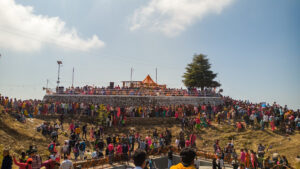
Badrinath Smart Dham : Balancing Spirituality and Development

Balancing Spirituality and development
Badrinath Smart Dham
Badrinath Smart Dham : Badrinath, nestled in the Garhwal Himalayas, stands as a sacred haven at an altitude exceeding 10,000 feet along the Alaknanda river. As part of India’s revered Char Dham pilgrimage, it shares its spiritual significance with Kedarnath, Gangotri, and Yamunotri. However, recent developments have unveiled a transformative journey for Badrinath, from a holy pilgrimage site to a “Smart Dham” through the implementation of the Badrinath Master Plan.
The Vision of a Smart Spiritual Hill Town
The genesis of this transformation can be traced back to the Dehradun Smart City Mission of 2017, paving the way for Badrinath to emerge as a ‘Smart Spiritual Hill Town’ in Uttarakhand. Envisioned as a dream project by Prime Minister Narendra Modi, this undertaking mirrors the post-2013 reconstruction efforts in Kedarnath following a devastating flood. The core of the plan includes the revitalization of the Alaknanda riverfront, the establishment of a plaza near the temple, community cloakrooms, queue arrangements for pilgrims, and the enhancement of lakes, roads, and parking facilities.
Divisions and Dissatisfaction
Despite the noble intentions behind the Smart Dham initiative, the execution has led to a schism among Badrinath’s inhabitants. The initial phase involved the demolition of structures around the bus stand and temple, causing a rift between those supporting the plan, including some priests and local businessmen, and those vehemently opposing it. Ongoing protests and demonstrations reflect the dissatisfaction and unrest within the community.
Badrinath Smart Dham : Impact on Sacred Sites
The repercussions of the urban transformation extend to the sacred Panch Dharas of Badrinath—Prahlad Dhara and Kurma Dhara. These streams, integral to the town’s spiritual heritage, found themselves buried under debris during the construction. Despite subsequent efforts to remove the debris, the accessibility to these streams and a locally renowned Gopal temple has been severely compromised.
Structural Consequences
The Smart Dham construction has not spared even the main temple of Badrinath. The right side of the temple has experienced structural issues, with visible cracks and falling stones. To counter this, iron girders have been employed to stabilize the structure. Locals voice concerns about the unscientific execution of the Badrinath Master Plan, accusing those responsible of lacking knowledge about the Himalayas, the environment, and the geological structure of the region.
Echoes of the Past: Environmental Concerns
The discontent among the locals echoes historical protests dating back to 1974 when talks of reconstruction first surfaced. Environmentalists like Chandi Prasad Bhatt, Govind Singh Rawat, and Gaura Devi, along with residents, protested against proposed construction for beautification. This led to the formation of a committee under Chief Minister Hemwati Nandan Bahuguna, resulting in a complete ban on construction in Badrinath after an ecological investigation.
Sangharsh Committees: A Contemporary Resistance
In response to the current developments, Sangharsh Committees, led by figures like teerth purohit Shrish Koiyal, have emerged to protest against the haphazard implementation of the Badrinath Master Plan. They highlight the absence of genuine consultations with the local community, priests, and businessmen, emphasizing that the construction occurred during a time when the holy portals were closed, depriving people of their say in the matter.
Environmental Impact: Debris in the Alaknanda River
Allegations surface regarding the disposal of debris generated from demolitions. Some claim that over half of the debris has been discarded into the sacred Alaknanda river. While the soil has washed away, the stones remain, leading to concerns about the increased water level in the river. This poses a threat to the fragile Himalayan ecosystem, indicating a disregard for the environmental consequences of development initiatives.
Badrinath Smart Dham: Balancing Progress and Preservation
Badrinath Smart Dham : The ongoing transformation of Badrinath from a Holy Dham to a Smart Dham raises essential questions about the delicate balance between progress and preservation. While the aspirations for development are commendable, it is crucial to approach such projects with a profound understanding of the ecological and cultural sensitivity of the region. The protests, historical precedents, and environmental concerns underscore the need for a more inclusive and thoughtful approach to safeguard the spiritual and natural sanctity of Badrinath.
Badrinath: Balancing Spirituality and Development