Culture and Tradition of Pithoragarh
Culture and Tradition of Pithoragarh
Culture and Tradition of Pithoragarh
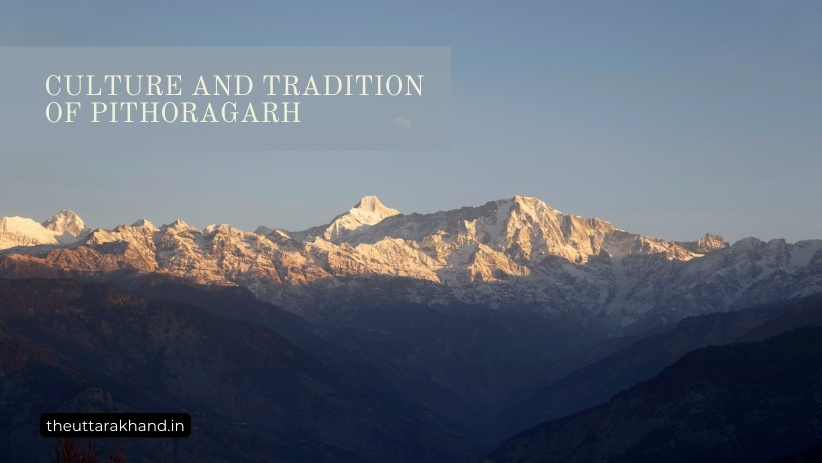
Culture and Tradition of Pithoragarh : Nestled in the lap of the Himalayas, Pithoragarh district is blessed with immense natural beauty and rich cultural heritage. The district has a unique culture that has been shaped by its geography, history, and the diverse ethnic groups that inhabit the region.
Pithoragarh has a predominantly Hindu population, but there are also Buddhists, Sikhs, Muslims, and Christians living together harmoniously. The local culture is reflected in the language, cuisine, attire, festivals, folk arts and dances, religious beliefs and practices, etc. of the people.
This article explores the cultural fabric of Pithoragarh by delving into various aspects of the traditional local lifestyle, belief systems, customs, performing arts, etc. It also highlights some of the most popular festivals celebrated with great fervor in the district.
So let’s begin our cultural journey across Pithoragarh!
Culture and Tradition of Pithoragarh : Ethnic Groups and Communities
Pithoragarh district is home to several ethnic tribal groups and communities such as Bhotias, Tharus, Bukshas, Jaunsaris, etc. Each of these groups has their distinct culture, language, belief systems, lifestyle, etc.
Bhotia Community
The Bhotia community mainly inhabits the high-altitude Himalayan region of Johar valley in Pithoragarh. They have Mongoloid features and Tibetan descent. Bhotias are divided into several sub-groups:
- Marcha – They live in the upper regions of Johar valley.
- Tolcha – Inhabit the middle altitude zones.
- Gyagar Khampa – Reside in the lower parts of Johar.
The main occupation of Bhotias is trans-Himalayan trade and sheep/goat herding. They speak Tibetic languages and follow Buddhism. Their culture reflects strong Tibetan influence in cuisine, attire, customs, etc.
Some unique Bhotia traditions are:
- Fraternal polyandry – One woman marries all brothers of a family
- Nuclear family system
- Elaborate and colorful wedding rituals
Bhotia attire for both men and women involves thick woolen gowns, caps, boots, etc. suited for the extreme cold climate. Their diet includes Tibetan delicacies like thukpa, momo, shapta, tingmo, etc.
Tharu Tribe
The Tharus have Mongolian ancestry and are the native tribes of the Terai region. They were excellent malaria resistance and could thrive in the earlier dense malarial jungles of Terai that others could not inhabit.
Tharus have an animistic belief system and worship nature gods and goddesses. Some of their deities are:
- Nisang Bonga – The supreme god
- Ganga and Jamuna – River goddesses
- Ban Devta – Forest god
The Tharus lead a simple agrarian lifestyle based on subsistence farming. They have rich oral folk culture in the form of songs, dances, folk tales, etc. The women are known for their colorful traditional outfits and tribal jewelry.
Buksha Tribe
The Bukshas are among the oldest inhabitants of Johar valley with traces of Proto-Austroloid ethnicity. They speak the Buksha language which belongs to the Tibeto-Burman family.
Earlier Bukshas practiced shamanism but later converted to Buddhism under Tibetan influence. However, they have retained many of their native animistic beliefs as well.
The Buksha tribes are mainly pastoral nomads involved in sheep/goat herding. Their culture is very similar to the Bhotias in terms of attire, cuisine, lifestyle, etc.
Jaunsari Tribe
The Jaunsaris are believed to have migrated from Rajasthan and inhabit the Jaunsar-Bawar region of Dehradun and Tehri districts. But some Jaunsari settlements are also found in the Thal region of Pithoragarh.
They have their distinct Jaunsari language and script. The Jaunsaris worship both Hindu and folk deities. Culturally, they are close to mainstream Pahari Hindus.
Religion and Belief Systems
The majority religion in Pithoragarh is Hinduism followed by over 80% of the population. Other religions include Buddhism, Islam, Sikhism, Christianity, etc. Many syncretic folk religious cults are also practiced by the tribal groups.
Some of the main religious and spiritual traditions of the region are:
Hinduism
Hinduism dominates the religious demography of most parts of Pithoragarh except the trans-Himalayan zone. The local variant of Hinduism has absorbed elements of ancient animistic-shamanic tribal faiths.
Important Hindu shrines in Pithoragarh are:
- Patal Bhuvaneshwar – An underground cave temple dedicated to Lord Shiva
- Maa Kali Temple, Gangolihat – Famed Shaktipeeth temple
- Mostamanu Temple – 16th century temple with intricate stone carvings
- Kamaksha Temple – Dedicated to Goddess Kamakshi Devi
Hindu religious life revolves around important festivals like Diwali, Dussehra, Janmashtami, Mahashivratri etc. Besides mainstream Hinduism, there are also some esoteric Tantrik cults that have followers in remote parts.
Buddhism
Buddhism has a strong presence in the trans-Himalayan highlands inhabited by communities of Tibetan descent like Bhotias, Byansis, etc. There are many Buddhist monasteries (gompas) that preserve the Tibetan Buddhist heritage.
Some major Buddhist gompas in the region are:
- Yuma Gompa, near Dharchula
- Tawaghat Gompa
- Sumda Choon Gompa, Munsiyari
These monasteries are storehouses of ancient Buddhist manuscripts, thangka paintings and artifacts. The Mahayana school of Buddhism is followed.
Tribal Animism
Many ethnic tribal groups like Tharus, Bukshas, Jaunsaris, etc. follow their native animistic-shamanic faiths that revolve around worship of nature, spirits, ancestors, etc.
Their religious life is interwoven with rich oral traditions, festivals, rituals, sacred dance performances, etc. Shamans (spirit-mediums) are revered and consulted for their knowledge of herbal cures.
Syncretic Folk Cults
Pithoragarh also has many syncretic folk religious cults that blend both Hindu and animistic beliefs. These are mainly localized rural traditions centered around a specific folk deity.
Some popular folk cults are:
- Worship of local village gods and goddesses
- Veneration of ancestors and spirits
- Worship of clan or family deities
Devotees of folk deities often go into trance during ritual music and dance performances. Animal sacrifices are also offered to some folk gods.
Language & Literature
The main languages spoken in Pithoragarh district are Kumaoni and Hindi. The trans-Himalayan tribal groups speak Sino-Tibetan languages like Byangsi, Rangkas, Darmiya, Chaudangsi, etc.
Kumaoni language has many regional dialects and is rich in folk literature – especially folk songs, ballads, proverbs, riddles etc. The Kumaoni script is similar to the Devanagari script of Hindi.
Prominent poets and writers in Kumaoni are Ganga Ramola, Mohan Upreti, Krishna Chandra Pandey, etc. Kumaoni literature mainly explores social issues, human values and the stunning natural beauty of the Kumaon Himalayas.
Several books and manuscripts in Tibetan and other Himalayan languages are also preserved in the Buddhist monasteries of the region.
Cuisine & Food Culture
The cuisine of Pithoragarh offers a fabulous blend of flavors from the hills and the plains. It uses fresh local ingredients like pulses, vegetables, tubers, greens, herbs, meat and dairy products.
Some quintessential Kumaoni dishes are:
- Aaloo ke Gutke – A spicy potato curry
- Bhatt ki Churkani – Black soybean preparation
- Phaanu – Black chickpea curry
- Kumaoni Raita – Yogurt-based salad with cucumber/tomatoes
- Aaloo Ol – Potato pancakes
- Rice flour rotis like Mandua ki Roti, Jhangora ki Roti etc.
Non-vegetarian delicacies include Mutton, Chicken, Fish and River Crab curries. Sweets and desserts like Baal Mithai, Singori, Jhangore ki Kheer, etc. are prepared during festivals.
The trans-Himalayan Bhotia tribes have a Tibetan-influenced cuisine that includes items like Thukpa soup, Momos, Skyu bread, Chang beer made from barley, etc.
Traditional Attire & Accessories
The traditional outfit for Kumaoni women is ghagra (long flared skirt) and kurta with a cloth band called Kamand tied on the waist and shoulders. Married women wear pichoda veils and put a bindi on the forehead.
Bridal wear involves elaborate outfits in red, gold and green shades decorated with traditional motifs. The traditional umbrella-shaped cap called Choukhadi is worn by married ladies during ceremonies.
Silver jewellery like Hansuli, Kanthi, Jhumkis, Nath (nose ring), bangles, anklets etc. are integral parts of Kumaoni traditional attire. Tattoos and flower garlands are used to decorate the hair.
Men wear Kurta-dhoti/pajama along with traditional jackets and waistcoats called Bakhu. Headgears include Bhoto caps of various designs.
The attire of trans-Himalayan tribes is designed to keep them warm. Men and women wear woolen gowns called chuba, pants, boots, caps etc. These have bright and intricate embroidered motifs.
Folk Music & Dance
Folk songs and dances are integral parts of the culture of Pithoragarh. They provide a glimpse into the communal harmony, values, lifestyle and festivals of the regional communities.
Some major folk dance forms are:
Chanchari
An ancient celebratory dance performed in group by Kumaoni women wearing traditional outfits. It is done during festivals to invoke the blessings of local deities.
Jagar
A trance inducing ritual dance form practiced by spirit mediums and shamans to drive away evil spirits. The dancer wears elaborate costumes and headgears.
Thaliya
Performed during weddings and other occasions by men and women singing traditional songs while dancing in a circle.
Bhotia Dance
The colorful masked dances of Bhotia and Tibetan tribes depicting themes from Buddhist folklore. These are accompanied by cymbals, horns and drums.
The folk music portrays the natural beauty of the hills through songs of love, nature, separation etc. Traditional instruments used are dhol, damau, turri, ranasingha, dholki, etc.
Arts & Handicrafts
Pithoragarh offers a rich variety of handicrafts that provide livelihoods to many skilled artisans. These handicrafts reflect the superb craftsmanship of the locals.
Prominent handicrafts items are:
- Intricately carved wooden masks and utensils
- Beautifully woven woolen shawls, carpets and blankets
- Cane and bamboo products like baskets, furniture etc.
- Metal crafts – brass/copper utensils, ritual items etc.
- Stone carving and slate works
- Thangka paintings, Buddhist scrolls and artifacts
Major Festivals & Events
Pithoragarh comes alive with the celebration of many colorful festivals that are steeped in mythological stories and local culture. People celebrate with family gatherings, fairs, music/dance performances, rituals and feasting.
Some of the popular festivals celebrated are:
Harela
- Celebrated: Bhadrapada Shukla Pratipada (July-August)
- Marks the arrival of monsoons and greenery
- People perform ritual bath, wear green clothes and eat green leafy veggies
- Folk dance and music performances
Khatarua
- Celebrated: Bhadrapada Shukla Navami (August – September)
- Agricultural festival marking the start of sowing season
- Ritual worship of farm tools and cattle with vermillion/flowers
- Traditional Kumaoni dishes like Bhatt ki Churkani, Dubka, etc. eaten
Nanda Devi Raj Jat
- Celebrated once in 12 years in reverence of Goddess Nanda Devi
- Month long journey with Nanda Devi idol to her mountain abode
- Lavish festivities at Bedini Bugyal with fairs and cultural programs
Ghee Sankranti
- Celebrated on first day of Magha month (Jan 14/15)
- Marks the end of winter solstice and start of longer days
- People eat Til ke Laddoo and ghee preparations
- Women observe fast for family’s wellbeing
Bissu Fair
- Local fair held at Bissu village near Dharchula
- Celebrated before onset of winter in Kartik month
- People worship ancient Bissu Devta temple
- Includes heritage food stalls, music and dance
Tibetan Losar
- Tibetan New Year festival according to Buddhist calendar
- Celebrated in monasteries and Bhotia villages
- Prayer rituals, hanging of religious flags and feasts
- Losar displays, folk dances and songs
These festivals promote social and religious harmony among various communities. The district tourism board also organizes the annual Pithoragarh Mahotsava – a 3 day affair showcasing the cultural extravaganza of Kumaon region.
Conclusion to Culture and Tradition of Pithoragarh
Culture and Tradition of Pithoragarh, Pithoragarh offers a fabulous fusion of hill and high-altitude cultures through its ethnic diversity. The traditional lifestyle, languages, faiths, attire, food, artforms, and festivals of the inhabitants showcase the composite cultural heritage of the district.
From the shamanistic rituals of Tharu tribes to the masked dances of Buddhists…the district is home to many unique traditions. These traditions symbolize the regional identities and strong community bonds shared by the locals.
The need of the hour is to preserve this priceless living heritage by promoting cultural tourism. The youth should also be encouraged to connect with their roots and keep their traditions alive.
Culture and Tradition of Pithoragarh:
Q: What are the major ethnic tribes found in Pithoragarh district?
A: Some key ethnic tribes of Pithoragarh are Bhotias, Tharus, Bukshas, Jaunsaris etc. Each has its unique culture, faiths, lifestyle etc.
Q: What type of traditional attire is worn by locals in Pithoragarh district?
A: Kumaoni women wear colorful ghagra-kurta with silver jewellery. Men wear kurta-dhoti/pajama. Tribes wear woolen gowns, boots etc.
Q: What are some unique Pithoragarh cuisine delicacies one must try?
A: Some lip-smacking Pithoragarh dishes are Aaloo ke Gutke, Bhatt ki Churkani, Singori mithai, Mandua rotis etc.
Q: Which are the most popular folk dance forms of Pithoragarh district?
A: Famed folk dances are Chanchari, Jagar, Thaliya performed during festivals. Bhotia tribes have colorful masked dances.
Q: Where can one buy authentic Pithoragarh handicrafts items in the district?
A: One can buy items like carved wooden masks, woolen shawls, metal crafts etc. directly from artisan villages.