Economy of Pithoragarh
Economy of Pithoragarh
Economy of Pithoragarh
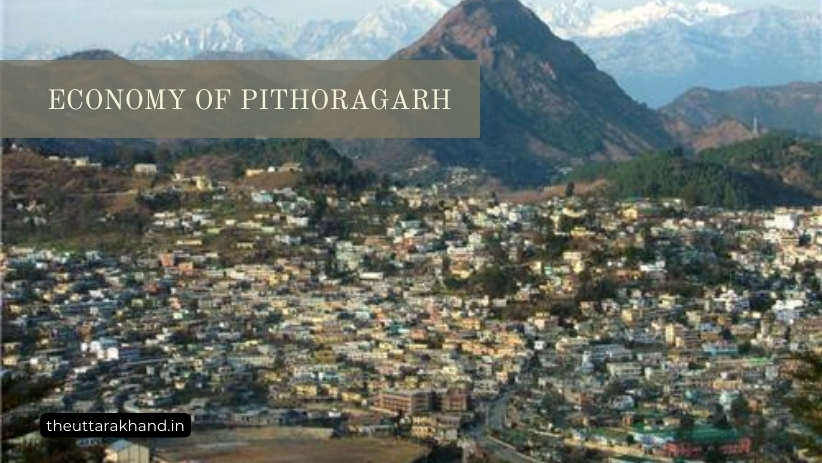
Economy of Pithoragarh : Pithoragarh district is located in the eastern part of the state of Uttarakhand in India. With a predominantly mountainous terrain, the economy of Pithoragarh has traditionally been centered around agriculture, animal husbandry and small-scale cottage industries. However, in recent years there have been efforts to promote tourism, horticulture and hydroelectric power generation as well.
The key aspects of Pithoragarh district’s economy include:
Agriculture
Agriculture is a major economic activity in Pithoragarh, employing over 60% of the total workforce. However, only about 12% of the total geographical area is available for cultivation due to the hilly terrain and forest cover.
Major Crops
The major crops grown are paddy, wheat, mandua, jhangora, barley and potato. Cash crops like ginger, turmeric and rajma are also cultivated. Horticulture crops such as apple, peach, plum, pear and apricot are grown in some areas.
Challenges
Agriculture in Pithoragarh faces several challenges such as small and fragmented land holdings, lack of irrigation facilities, poor road connectivity to markets, crop damages due to wild animals, shortage of improved seeds and lack of cold storage facilities.
Government Initiatives
- Promoting off-season vegetables and seed production
- Expanding area under horticulture through plantation drives
- Construction of polyhouses and rainwater harvesting structures
- Establishing cold chain infrastructure
- Providing subsidies on equipment and transportation costs
Animal Husbandry
Animal rearing is an integral part of the rural economy in Pithoragarh. Key aspects include:
Cattle Farming
Cattle farming is done mainly for milk production. Improved cattle breeds like Jersey and Holstein Friesian are being promoted.
Sheep & Goat Rearing
Wool production is an important economic activity with sheep rearing done extensively. The wool is used in manufacturing woolen garments.
Fisheries
Commercial fisheries have been developed in the river and lakes of Pithoragarh. Trout fish production has increased through trout hatcheries set up by the government.
Forestry
About 60% of the total area of the district is under forest cover. Forestry plays an vital economic role through:
- Employment in forest conservation, harvesting and trade
- Production of herbs, medicinal plants and honey
- Eco-tourism promotion
Cottage & Small Industries
Some of the prominent cottage and small-scale industries in Pithoragarh district include:
Handicrafts
- Woolen knitwear and fabrics
- Carpets and rugs
- Wooden artifacts and furniture
- Cane and bamboo products
Food Processing
- Honey, fruit juices and squash
- Pickles, papad and spices
- Snacks and savories
Tourism Industry
With its natural beauty and cultural heritage, tourism is seen as a major growth area for Pithoragarh district. Important tourist destinations are:
Adventure Tourism
Trekking, mountaineering, rafting, skiing and mountain biking. Major destinations are Munsiyari, Birthi Falls and Panchachuli base camp.
Pilgrimage Tourism
Major temples and shrines located across the district including Patal Bhuvaneshwar and Gangolihat.
Leisure Tourism
Several scenic spots for nature walks, photography, angling and camping. Key spots are Berinag, Chaukori, Didihat and Jauljibi.
Hydropower
Pithoragarh has a huge hydropower potential which is being increasingly tapped. Some major upcoming hydroelectric projects are:
- Dhauli Ganga Hydro Electric Project – 280 MW
- Khairasain Hydro Electric Project – 76 MW
- Tanga Hydro Electric Project – 100 MW
Several small hydro projects have also been commissioned recently on various rivers and tributaries.
Mineral Resources
Pithoragarh has deposits of various minerals such as magnesite, copper, soapstone, iron ore, limestone and granite. Systematic geological surveys are being carried out to map and quantify the mineral reserves for future extraction and trade.
Conclusion to Economy of Pithoragarh
Economy of Pithoragarh : The economy of Pithoragarh district is gradually evolving from just dependence on traditional agriculture and forests. With suitable government interventions in terms of investments, infrastructure development, financial incentives and skill training programs, there is immense potential for growth in tourism, food processing, handicrafts, horticulture and hydro power sectors in the district.