History of Bageshwar District Uttarakhand
History of Bageshwar
History of Bageshwar
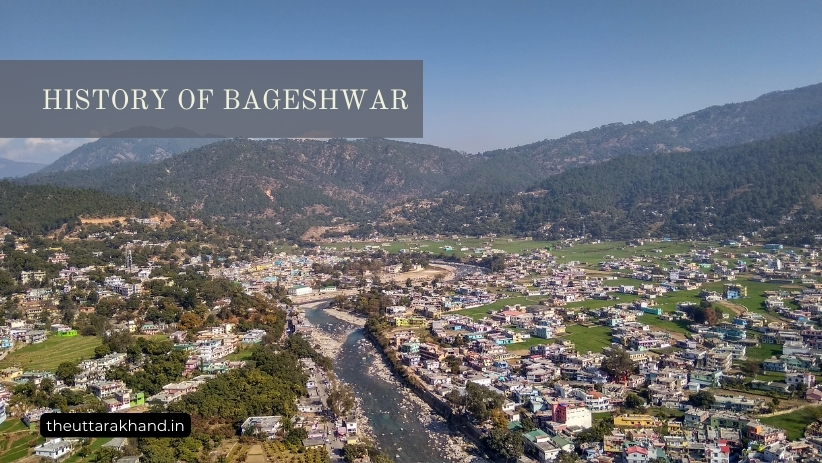
History of Bageshwar : Bageshwar is a district situated at the confluence of the Saryu, Gomti and latent Bhagirathi rivers in the state of Uttarakhand, India. Surrounded by the Bhileswar and Nileshwar mountains, Bageshwar is considered a holy site associated with Lord Sadashiva.
The Bageshwar district has a rich history, having been ruled by various dynasties over the centuries. It was established as its own district relatively recently, in 1997, after years of people demanding separation from the Almora district.
Early History of Bageshwar
The area that is now the Bageshwar district was known historically as Danpur. In the 7th century AD, it was ruled by the Katyuri dynasty. After the Katyuris fell from power in the 13th century, the region was controlled by their direct descendants, the Baijnath Katyuris, who were based in the Baijnath area.
In 1565, King Balo Kalyan Chand of the Chand dynasty from Kumaon annexed Danpur along with Pali, Barahmandal and Mankot. This marked the area’s integration into Kumaon.
Gorkha Rule
In 1791, the Gorkhas of Nepal invaded Kumaon and took control of the Almora seat of power. This brought Danpur and the surrounding areas under Gorkha rule. The Gorkhas administered the Bageshwar/Danpur area for the next 24 years.
Their rule came to an end in 1814 when they clashed with the forces of the British East India Company along the border. The Anglo-Nepalese War concluded with the Treaty of Sugauli in 1816, which forced Nepal to cede all the territories they had annexed from the Company, including Kumaon and Bageshwar/Danpur.
British Rule
After the region’s annexation by the British, Bageshwar became part of the Danpur pargana in the Almora district of the United Provinces (later Uttar Pradesh). It retained this administrative status through the rest of British rule.
In the early 20th century, the Bageshwar area became a prominent center of the Indian freedom movement, producing a number of nationalist leaders who resisted British rule.
Towards Statehood
After India gained independence in 1947, the United Provinces were renamed Uttar Pradesh and the Almora district remained part of this state.
In the 1970s, the first administrative upgrades for Bageshwar came when it was declared a separate tehsil in 1974 and then a pargana in 1976. This gave Bageshwar more of a distinct administrative identity within the Almora district.
Through the 1980s, calls grew stronger from multiple regional stakeholders to have Bageshwar declared its own separate district within Uttar Pradesh.
Finally, in 1997, after many years of people demanding district status for Bageshwar, the Uttar Pradesh government agreed and issued a formal notification. The Bageshwar district was carved out from the eastern portion of Almora district.
Uttarakhand Statehood
Just four years after gaining district status, another major change came to the Bageshwar region. In 2000, the Uttarakhand movement successfully led to the separation of Uttar Pradesh’s hilly districts, including Almora and Bageshwar, to form the new state of Uttarakhand.
Therefore, since 2000, Bageshwar has been a full-fledged district within the state of Uttarakhand. Its boundaries and administrative structure have remained largely stable over the past two decades under the Uttarakhand state administration.
Geography and Administrative Divisions
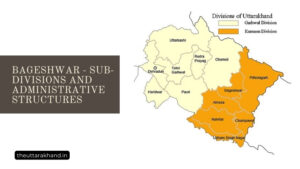
The Bageshwar district covers an area of about 2,246 square kilometers. Currently, it is divided into four tehsils – Bageshwar, Garur, Kapkot and Kanda.
Some of the main rivers flowing through the district are the Saryu, Gomti, Bhagirathi, Gori Ganga and Ramganga. The region is mountainous, with peaks of the Bhileswar and Nileshwar ranges rising over 3,000 meters.
Cultural and Religious Significance
In addition to its unique geography, the Bageshwar district derives immense cultural and religious meaning owing to its location at the confluence of important rivers.
The convergence point of the Saryu, Gomti and Bhagirathi is revered in Hindu scriptures. Bageshwar town hosts the renowned Bagnath Temple dedicated to Lord Shiva. Many smaller shrines and temples dot the district as well.
The region’s sacred status and natural beauty have been attracting Hindu pilgrims for centuries. Even today, temples like Bagnath, Chandika and Sriharu bring devotees from far and wide for spiritual solace.
Annual religious fairs and festivals like Vijaya Dashami, Vishuvati Puja and Harela celebrate the rich cultural heritage of Bageshwar. They are also vital economic events for locals.
Rulers and Prominent Figures
Over its long history, Bageshwar district has seen several dynasties rule over it:
Katyuri Dynasty (7th century AD) – Originated in Katyur valley near Joshimath. First dynasty to rule unified Kumaon-Garhwal region including Bageshwar/Danpur.
Baijnath Katyuri Dynasty (13th century AD) – Direct descendants of Katyuri kings who continued ruling Bageshwar/Danpur after the main Katyuri kingdom’s decline. Based out of Baijnath.
Chand Dynasty (1565 AD) – Kumaoni dynasty founded by Balo Kalyan Chand. Annexed parts of Garhwal including Bageshwar.
Gorkha Dynasty of Nepal (1791-1815 AD) – Ruled over Kumaon and Bageshwar/Danpur after invading and occupying Almora seat of Kumaon Kingdom.
British East India Company (1815-1947 AD) – Took over after defeating Gorkhas. Ruled through local administrators under overall jurisdiction of British authorities.
Some prominent historical personalities from the Bageshwar region include:
- Lal Raturi (1888 – 1925) – Freedom fighter from Bageshwar pargana who died in a protest agitation.
- G.C. Joshi (1889 – 1965) – Independence activist from Bageshwar who later served as minister in Uttar Pradesh government.
- Indramani Badoni (‘Baba’) (1905 – 1992) – Gandhian social reformer who led Bageshwar Satyagraha movement alongside Lal Raturi during freedom struggle.
Conclusion to History of Bageshwar
History of Bageshwar, the Bageshwar district has a long and storied past, having been part of several kingdoms and dynasties over two millennia. After centuries of external rule, it is now experiencing stability and growth under the young state administration of Uttarakhand in the post-independence era of modern India.
With its unique religious importance and breathtaking mountainous terrain, Bageshwar continues to hold an exalted position in Uttarakhand that draws in pilgrims, adventurers and nature-lovers alike from India and beyond.