Sustainable Tourism in Uttarkashi
Uttarkashi promotes eco-tourism, community-based tourism, organic farming and clean energy initiatives for environmentally sustainable growth of tourism industry.
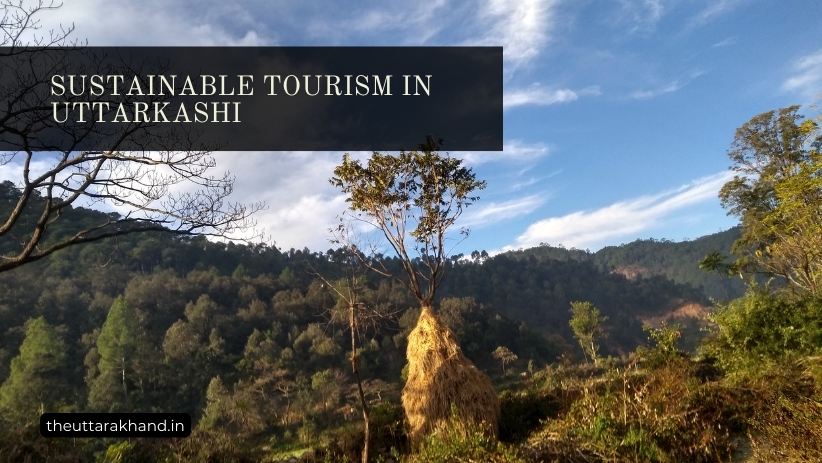
Uttarkashi promotes eco-tourism, community-based tourism, organic farming and clean energy initiatives for environmentally sustainable growth of tourism industry.
Sustainable Tourism in Uttarkashi
Sustainable Tourism in Uttarkashi, Nestled in the lap of mighty Himalayas, Uttarkashi is known as the ‘Abode of Gods’. This sacred land is home to several revered Hindu temples and pilgrimage sites like Gangotri, Yamunotri, Kedarnath and Badrinath. The district’s pristine natural beauty, glaciers, rivers and valleys attract tourists, pilgrims and adventurers alike.
However, being a hilly region, Uttarkashi is vulnerable to natural disasters like floods, landslides, earthquakes etc. Further, environmental issues like solid waste management, depletion of forest cover and loss of biodiversity also pose challenges.
In this context, governance and policy initiatives by central and state governments have played a key role in the region’s development. Local governance bodies like gram panchayats and van panchayats provide last mile service delivery and community participation. Special schemes and policies aim to promote sustainability, livelihoods and inclusive growth.
This article analyses Uttarkashi’s governance landscape, government schemes, disaster management efforts and sustainability policies in a comprehensive manner.
Sustainable Tourism in Uttarkashi : Government Policies and Programs
Several policy initiatives and governance reforms have been implemented in Uttarkashi district by central and state governments over the years.
Rural Development Schemes
Various centrally sponsored schemes like PMGSY, MGNREGA, NSAP, PMAY, SBM, PMKSY etc. have improved rural infrastructure, livelihoods, financial inclusion and living standards.
Key highlights:
- PMGSY – Rs 350+ crores sanctioned for construction of 130+ roads under Pradhan Mantri Gram Sadak Yojana till 2021. This has increased rural connectivity.
- MGNREGA – 50,000+ job cards issued and Rs 100+ crores spent on generating rural employment under Mahatma Gandhi NREGA scheme since its inception. Asset creation works like water conservation, afforestation etc. taken up.
- NSAP – 3000+ senior citizens receiving pension under National Social Assistance Programme.
- PMKSY – Micro irrigation systems set up under Per Drop More Crop component. This has helped increase crop productivity and farm incomes.
- SBM – Under Swachh Bharat Mission, Uttarkashi was declared Open Defecation Free (ODF) in December 2017. IHHL coverage increased from 62% in 2014 to 100% in 2018. This has improved sanitation and public health.
Health and Nutrition
Significant improvement seen in health infrastructure and service delivery. Some major initiatives:
- Under National Health Mission, 30 Sub-Centers, 8 PHCs and 3 CHCs are functioning across Uttarkashi district. Jan Aushadhi stores, dialysis centers, pathology labs also opened.
- 7 MBBS and 46 Specialist doctors serving in the district hospital and CHCs. Patient influx increased from 6000 per month in 2016 to 11,000 per month in 2022.
- Immunization coverage increased to more than 90%. Malnutrition among children under 5 years reduced from 25% in 2015 to less than 15% in 2022.
- Ayushman Bharat – Pradhan Mantri Jan Arogya Yojana launched in 2018. More than 15,000 golden cards issued so far enabling cashless treatment.
Education and Skill Development
- Under Samagra Shiksha Abhiyan, infrastructural improvements done in 500+ government schools. Teacher training programs and distribution of uniforms, textbooks etc. also taken up.
- Enrolment rate at primary level increased from 82% in 2010 to 95% in 2020. Drop-out rates reduced through initiatives like residential schools, scholarships, mid-day meals etc.
- For higher education, degree colleges set up at Chinyalisaur, Dunda etc. New PG courses introduced at Government Degree College Uttarkashi.
- For skill development, programs like DAY-NULM, DAY-NRLM, PMKVY, DDU-GKY impart vocational skills to youth in areas like tourism, handicrafts, food processing, electronics etc. This aims to increase their employability.
Financial Inclusion
- Under Pradhan Mantri Jan Dhan Yojana, more than 50,000 bank accounts opened so far with a deposit base exceeding Rs 100 crores.
- To provide banking access in remote areas, 5 Banking Correspondents deployed. 10+ ATMs also installed across various locations.
- Under Stand Up India, Rs 3.5+ crores loan amount sanctioned, enabling SC/ST and women entrepreneurs to set up businesses.
- To promote digital payments, 5000+ merchants onboarded for accepting payments via BHIM UPI.
Tourism and Culture
- Under Swadesh Darshan scheme, integrated development of tourism facilities taken up at Gangotri and Yamunotri pilgrimage circuits.
- ‘Paint My City’ initiative launched in 2021 for giving heritage look to houses. Ancient temples like Guptakashi, Ukhimath being renovated under HRIDAY scheme.
- ‘Apni Dharohar Apni Pehchan’ scheme promoting private investment in tourism amenities near pilgrim sites. Home stays, tourist facilitation centers, illumination works etc. taken up.
- ‘Veer Chandra Singh Garhwali Tourism Self-Employment Scheme’ providing subsidized loans to youth for setting up tourism ventures.
Impact of Central and State Government Initiatives
The governance initiatives taken up by central and state governments in Uttarkashi have led to significant socio-economic development in the region. Some major impacts:
Infrastructure Development
- Construction of all-weather motorable roads under PMGSY has reduced travel time and transportation costs. This has eased accessibility to markets, schools, hospitals etc.
- Improvement in power infrastructure – 15 new substations set up in past 5 years. Household electrification increased from 72% in 2015 to 98% presently. 24×7 power supply achieved in urban areas.
Human Development
- Increased primary healthcare facilities reduced IMR, MMR and malnutrition. Institutional deliveries increased leading to lower maternal mortality.
- Higher enrolment in schools seen due to infra upgradation, residential facilities and retention schemes. Educational outcomes also showing improvement.
- Skill training enhancing youth employability – more than 5000 youth got placed in various jobs through skill programs in past 3 years.
Inclusive Growth
- Expansion of banking network and financial schemes has led to greater credit penetration. Many first-time entrepreneurs availing MUDRA loans, Stand up India etc.
- Tourism promotion schemes creating local job opportunities in hospitality, transport, adventure sports, handicrafts sectors. Home stays also supplementing rural incomes.
- MGNREGA providing supplementary wages to unskilled workers through asset creation works. Women participation increased to over 50%.
Thus, the governance efforts have led to noticeable progress across parameters like infrastructure, health, education, financial access, tourism, livelihoods and women empowerment. However, more ground level implementation strengthening required for schemes to achieve their full potential.
Local Governance Mechanisms and Policies
In addition to state and central government schemes, Uttarkashi has well developed local governance institutions that enable decentralized planning and community participation.
Panchayati Raj System
There are 99 Gram Panchayats across 13 development blocks of Uttarkashi district. The 3-tier Panchayati Raj system functions effectively with Gram Sabhas, Gram Panchayats at village level; Block Panchayats at block level; and Zila Panchayat at district level.
- Gram Sabhas conduct social audits of government schemes, identify beneficiaries, determine priorities and allocate resources for village development plans.
- Gram Panchayats prepare annual plans and budgets, implement schemes, maintain village infrastructure etc. in their jurisdiction.
- Block and Zila Panchayats monitor and coordinate the activities of Gram Panchayats.
The decentralized planning and grievance redressal mechanisms have improved last-mile delivery of welfare schemes. Panchayats now leverage technology for better functioning through e-Panchayat applications, online monitoring systems etc.
Van Panchayats
Van Panchayats are traditional forest management institutions unique to Uttarakhand. They enable community participation in forest conservation by vesting rights over minor forest produce to local villagers.
- Uttarkashi has 100+ Van Panchayats protecting nearly 25,000 hectares of forest area. Executive committees are formed through elections every 5 years.
- Van Panchayats prepare micro-plans for forest development works like soil-water conservation, plantation, fire prevention etc. JFMCs support their functioning.
- Revenues earned from sale of grass, fruits etc. are used for community welfare activities like school infrastructure, drinking water facilities, village roads etc.
Thus, Van Panchayats have played a stellar role in maintaining forest cover while supporting livelihoods of forest-dependent communities of Uttarkashi.
Disaster Management Efforts
Uttarkashi’s fragile hilly terrain makes it prone to multiple disasters like floods, landslides, earthquakes, avalanches etc. The 2013 Kedarnath tragedy exposed the vulnerabilities of settlements along river banks and unstable slopes.
In response, significant steps have been taken on disaster preparedness and response over the past decade:
Policy and Institutional Mechanisms
- State Disaster Management Authority and District Disaster Management Authority formed for policy guidance and implementation oversight.
- District Disaster Management Plan prepared covering risk assessment, prevention, mitigation, preparedness, response, relief and rehabilitation.
- Control rooms established at district and block levels. Equipped with emergency communication systems and stocked with relief materials. NDRF team also based at district headquarter.
Early Warning Systems
- Automatic weather stations, water level recorders installed across rivers for weather forecasting and flood warnings. Alerts issued through bulk SMS, TV scrolls, sirens etc.
- Geo-hazard zonation mapping done to identify vulnerable slopes and settlements. This guides land use planning and relocation efforts.
- Community radio stations broadcasting public awareness programs on do’s and don’ts before and during disaster events.
Mitigation Infrastructure
- Flood protection works like construction of embankments, spur walls undertaken along Assi Ganga and Bhagirathi rivers near settlements.
- Landslide mitigation measures like vegetation cover, drainage channels, retaining walls etc. taken up in over 50 vulnerable zones.
- Over 100 flood shelters constructed for emergency accommodation. Stocked with essential supplies and connected to backup power.
- Disaster response training provided to police, home guards, civil defence volunteers, ASHA workers etc. to act as first responders.
While these interventions have improved coping capacities to an extent, challenges remain in areas like weather forecast reliability, remote terrain connectivity, rehabilitation of displaced families etc. Continued focus needed on community preparedness and resilience building.
Sustainable Tourism in Uttarkashi : Sustainability Efforts
Being a hilly region, preservation of Uttarkashi’s ecological integrity requires sustainable models balancing developmental needs and environmental concerns.
Eco-Tourism
- Regulated tourism with codes for waste management, resource usage, construction norms etc. being implemented in Gangotri National Park and Dayara Bugyal Meadows to minimize environmental impact.
- Under eco-tourism policy, village tours, home stays etc are being promoted. This provides income to locals while retaining social fabric and cultural ethos.
- Capacity building programs held regularly for hospitality stakeholders on sustainability practices related to energy, water, waste etc.
Organic Farming
- Organic certification obtained for traditional crops like rajma, urad, rice etc. This fetches higher prices for farmers while meeting rising market demand for organic produce.
- Natural farming techniques like zero-budget natural farming being propagated. Reduces reliance on chemical inputs thereby lowering cultivation costs.
- Community composting units set up leveraging solid waste from towns. The compost produced is used as organic manure by farmers thereby completing the circular economy loop.
Clean Energy
- Small hydro power projects being set up on Assi Ganga and Bhagirathi rivers and their tributaries. Provide clean electricity while ensuring minimum environmental impact due to run-of-river design.
- Under state solar policy, subsidized solar pumps provided to farmers. Also solar power packs given for basic electricity needs of off-grid households.
- Biogas plants installed using cattle dung and agri waste. Saves fuelwood usage and provides organic manure as byproduct.
Spring Rejuvenation
- Drying up of Himalayan springs poses major water security concern. Under Jal Jeevan Mission, over 150 dying springs revived so far through trenching, plantation, check dams etc.
- Wetland conservation works taken up in Assi Ganga basin for groundwater recharge. Community led efforts on for catchment area treatment and de-silting of lakes.
Thus Uttarkashi has taken measured steps towards building environmental sustainability amidst the challenges of economic development, natural disasters and climate change. The road ahead lies in scaling up successes through continued public education and community participation.
Conclusion on Sustainable Tourism in Uttarkashi
Sustainable Tourism in Uttarkashi, Uttarkashi has set positive governance benchmarks in inclusive development, disaster management and ecological sustainability despite difficult geographical and socio-economic constraints.
As it charts its future growth trajectory, the policy focus has to be on strengthening health and education outcomes, creation of skilled workforce, infrastructure building, promotion of sustainable tourism, and climate resilience planning.
Success lies in drawing learnings from traditional practices, leveraging community participation, adopting technology and encouraging private investments – while retaining the region’s cultural identity and core values.
With sincere efforts towards translating policies to ground action, combined with the indomitable Himalayan spirit of its people, Uttarkashi is sure to prosper as the peaceful abode of gods.