Wildlife of Uttarakhand

Wildlife of Uttarakhand
Wildlife of Uttarakhand
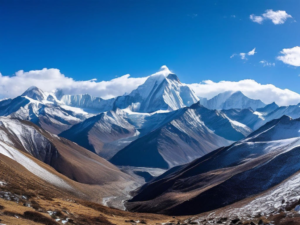
Wildlife of Uttarakhand : Nestled in the northern part of India, Uttarakhand is not only known for its diverse topography and natural beauty but also for its rich fauna and flora. The state’s diverse landscapes, ranging from towering snow-capped mountains to dense forests, undulating hills, and river valleys, support a wide variety of wildlife and plant species. In this section, we explore the rich fauna and floral world of Uttarakhand and their significance in the state’s ecosystem and tourism industry.
A Diverse Fauna World
Uttarakhand boasts a vast variety of exotic fauna, owing to its diverse topography and unexploited territories. The state is home to a wide range of mammals, birds, reptiles, and fish, making it a popular destination for wildlife enthusiasts and nature lovers.
Among the birdlife in Uttarakhand, more than four hundred varieties have been recorded in the Himalayan region. The shore aforests host a variety of species, including the Jewel Thrush, Black-headed Oriole, Black-headed Yellow Bulbul, Rosy Minivet, Laughing Thrush, Golden-backed Woodpecker, and the Blue Flycatcher. Wintering waterfowl, such as the Goosander, Brahminy Duck, and Green Shank, can also be spotted by the river edge. The monal, with its resplendent plumage of metallic green, glistening purple, startling red, and jet-black, is a sight to behold and is the state bird of Uttarakhand.
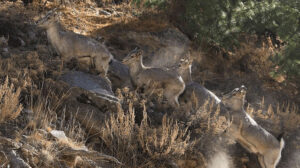
The animal world in Uttarakhand is diverse and includes species such as leopards, jungle cats, fishing cats, and leopard cats, as well as monkeys, longurs, wild cats, goats, pigs, foxes, and dogs. The state is also home to black bears, brown bears, and white bears, which can be found at different altitudes. Other notable animals found in Uttarakhand include the Himalayan blue sheep, Himalayan thar, goral, kastura (musk-deer), and sambar.
Uttarakhand’s rivers and lakes are home to a variety of fish species, including the Gidhi, Gyoonri, Ghoonla, and Bara Khasra, which can weigh up to 10 kg. Snakes, such as the cobra and the Russell’s viper, are found up to 1,800 meters, while the only hill-snake found above the altitude of 2,400 meters is Ancistrodon himalayanus.
A Vibrant Floral World
Uttarakhand houses a rich wealth of flora that mostly comprises a variety of flowers. The flora of Uttarakhand can be found in the Garhwal region, also known as the ‘Valley of Flowers,’ where a multitude of flowers of different colors bloom every spring. The state’s floral wealth is spread across sub-tropical, temperate, sub-alpine, and alpine zones, with each zone boasting a unique variety of plant species.
The sub-tropical zone in Uttarakhand features pure and mixed forests of Shorea robusta (Sal), Lannea coromandelica, Buchanania lanzan, Dalbergia sissoo, Haldina cordifolia, Syzygium cumini, Mallotus philippinensis, and Ficus spp. The temperate zone is marked by the presence of Quercus leucotrichophora (Banj oak), Rhododendron arboretum (Burans), and other species such as Myrica esculenta, Leonia ovalifolia, Ibex dipyrena, and Quercus semecarpifolia. The coniferous forests in this zone are unique and include species such as Pinus roxburghii (Chir Pine), Cadres deodar (Deodar, Cedar), Abies pindrow, Prunus cornuta, Acer caesium, and Betula utilis (Bhoj Patra).
The sub-alpine and alpine zones in Uttarakhand feature species such as Pinus wallichiana, Abies pindrow, Prunus cornuta, Acer caesium, Betula utilis, and various shrubby components of the genera Cotoneaster, Rosa, Berberis, Ribes, Junipers, Rhododendron anthropogenic, and Rhododendron campanulas. The herbaceous vegetation in these zones is represented by a number of species of genera Poenill, Primula, Aster, Saxifrage, Achaean, Delphinium, Polygonal, Corydalis, Pleurospermum, and Meconopsis.
To conserve Uttarakhand’s rich biodiversity, the state has declared twelve areas as ‘Protected,’ including six wildlife sanctuaries and six national parks. The Corbett National Park, established in 1936, is the first national park in the Asian mainland, while the Nandadevi Biosphere Reserve, established under the “Man and Biosphere” program of UNESCO, is Uttarakhand’s only and the country’s second Biosphere Reserve.
Wildlife of Uttarakhand, Uttarakhand’s diverse fauna and flora are not only a source of pride for the state but also play a significant role in its ecosystem and tourism industry. The state’s commitment to conservation is reflected in its protected area network, which exceeds the national average and showcases Uttarakhand’s dedication to preserving its natural heritage for future generations.
Wildlife of Uttarakhand :
- Q: What is the significance of Uttarakhand’s diverse fauna and flora?
A: Uttarakhand’s diverse fauna and flora are not only a source of pride for the state but also play a significant role in its ecosystem and tourism industry. The state’s rich biodiversity contributes to its natural beauty and attracts visitors from all over the world, while also supporting the livelihoods of millions of people who depend on these resources. - Q: Which bird species are commonly found in Uttarakhand?
A: More than four hundred bird species have been recorded in the Himalayan region of Uttarakhand, including the Jewel Thrush, Black-headed Oriole, Black-headed Yellow Bulbul, Rosy Minivet, Golden-backed Woodpecker, Blue Flycatcher, and the monal, which is the state bird. - Q: What are some of the notable animal species found in Uttarakhand?
A: Uttarakhand is home to a diverse range of animal species, including leopards, jungle cats, fishing cats, and leopard cats, as well as monkeys, longurs, wild cats, goats, pigs, foxes, and dogs. The state is also home to black bears, brown bears, and white bears, which can be found at different altitudes. Other notable animals found in Uttarakhand include the Himalayan blue sheep, Himalayan thar, goral, kastura (musk-deer), and sambar. - Q: How has Uttarakhand conserved its rich biodiversity?
A: To conserve Uttarakhand’s rich biodiversity, the state has declared twelve areas as ‘Protected,’ including six wildlife sanctuaries and six national parks. The Corbett National Park, established in 1936, is the first national park in the Asian mainland, while the Nandadevi Biosphere Reserve is Uttarakhand’s only and the country’s second Biosphere Reserve. - Q: What is the ‘Valley of Flowers’ in Uttarakhand?
A: The ‘Valley of Flowers’ is a region in the Garhwal Himalayas of Uttarakhand that is renowned for its diverse and vibrant flora. The valley is home to a multitude of flowers of different colors, which bloom every spring, making it a popular destination for nature lovers and photographers. - Q: How does Uttarakhand’s floral wealth contribute to the state’s economy?
A: Uttarakhand’s floral wealth contributes significantly to the state’s economy through tourism, as the state’s diverse landscapes and natural beauty attract visitors from all over the world. The state’s commitment to conservation is also reflected in its protected area network, which exceeds the national average and showcases Uttarakhand’s dedication to preserving its natural heritage for future generations.