History Udham Singh Nagar
History Udham Singh Nagar
History Udham Singh Nagar
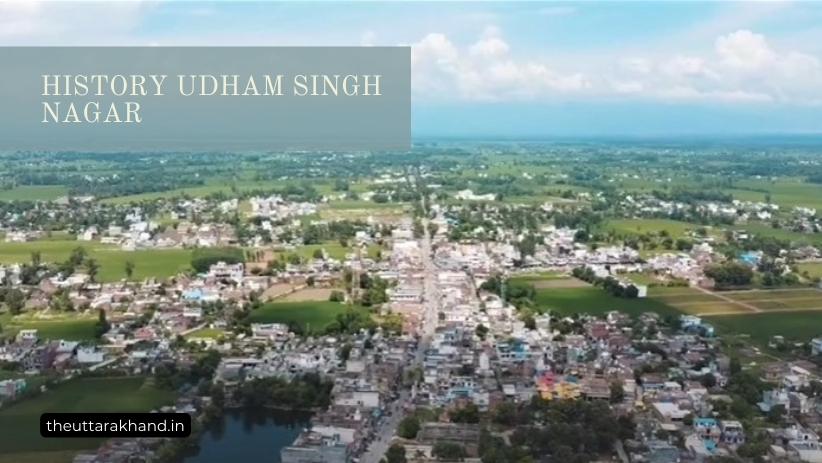
History Udham Singh Nagar : Udham Singh Nagar, located in the Tarai region of Uttarakhand, is one of the most prosperous and developed districts of the state. With its rich alluvial soils, abundant water resources, and favorable climate, the district has emerged as an agricultural and industrial hub. However, the present-day prosperity has been built on a history of struggle and resilience.
The district derives its name from the freedom fighter, Udham Singh, who avenged the Jallianwala Bagh massacre by assassinating Michael O’Dwyer. It was created in 1995 by bifurcating Nainital district. But the history of human settlement in the region dates back thousands of years. This article traces the history of Udham Singh Nagar from ancient times to the current era of development.
Ancient History
The fertile plains of Udham Singh Nagar have been inhabited since ancient times. Excavations have revealed stone age tools, indicating the presence of pre-historic humans. The region was located on important trade routes connecting the Indo-Gangetic plains to the Tibetan plateau.
During the medieval period, the area was ruled by various dynasties including the Katyuris, Chands, Gorkhas, and the British. It endured many invasions given its strategic location and abundant resources. There are several relics from these periods such as the ruins of ancient Shiva temples and Buddhist monasteries.
Arrival of the British
In 1815, the region came under the direct control of the British after the Anglo-Nepalese war. The British were attracted by the region’s fertile soil, dense Sal forests and abundant wildlife. As per the Sugauli Treaty, the King of Nepal renounced his claims over the region in favor of the East India Company.
The British started exploiting the natural resources of the region. Sal forests were cleared for the expansion of agriculture. The region also became an important source of recruits for the British Indian Army. But the lives of local inhabitants remained unchanged under the Company rule.
The Making of Nainital District
In 1839, Mr. Barron was appointed as the first Commissioner of the Kumaon division. He established the headquarters at Almora. During his tenure, the present-day Udham Singh Nagar remained part of the Haldwani subdivision of the Almora district.
It was only in 1891 that the Nainital district was carved out of the Almora district. The new district consisted of 3 tehsils – Nainital, Haldwani, and Ramnagar. The areas that now comprise Udham Singh Nagar were spread across the Haldwani and Ramnagar tehsils of Nainital district.
The Turning Point – Partition and Rehabilitation
The partition of India in 1947 proved to be a turning point in the history of the region. As the new dominions of India and Pakistan were created, mass migration and communal riots ensued. Millions were displaced from their homes and left destitute.
To rehabilitate the displaced persons, the Government of Uttar Pradesh launched resettlement schemes. Barren lands in the Tarai region were identified to settle the refugees. In 1948, the Government started the Rudrapur Resettlement Scheme on the Haldwani-Tanakpur road.
Thousands of displaced families belonging to various communities were allotted agricultural plots in planned settlements. Migrants flowed in from Punjab, Kashmir, Rajasthan, Uttar Pradesh and other parts of the country. Within a few months, the wilderness was transformed into cultivated fields interspersed with villages.
This major resettlement drive changed the demography and economy of the region for good. Non-agricultural activities also began to pick up to meet the needs of the rehabilitated families.
Formation of Udham Singh Nagar
Despite the development impetus from rehabilitation schemes, the region lagged behind owing to its remote location. The long distance from Nainital proved to be an administrative hurdle.
In 1995, the Uttar Pradesh government decided to carve out a new district to give focused attention to the region’s development. The Rudrapur and Kashipur tehsils of Nainital district were merged to form the new Udham Singh Nagar district. Rudrapur was chosen as the headquarters given its central location.
The new district was named after the Indian revolutionary, Udham Singh. It marked the beginning of rapid industrialization and urbanization in the region. The creation of Uttarakhand state in 2000 gave a further boost to development activities.
An Agricultural Powerhouse
Agriculture has been the mainstay of Udham Singh Nagar since the rehabilitation era. The Tarai plains are endowed with fertile alluvial soils ideal for growing crops. Availability of perennial canal irrigation enables multiple cropping seasons.
The main crops grown include paddy, wheat, sugarcane, pulses, oilseeds, millets, and vegetables. High-yield varieties are cultivated using modern techniques and equipment. This has positioned Udham Singh Nagar among the highest producers of food grains in Uttarakhand.
Several research institutes such as G.B. Pant University of Agriculture & Technology have played a key role in advancing farming technologies. The Krishi Vigyan Kendras established across the district enable technology transfer to farmers through training and demonstrations.
Industrialization
Though agriculture continues to employ a majority of the workforce, industries have emerged as the new engines of economic growth in Udham Singh Nagar.
The State Industrial Development Corporation of Uttarakhand (SIDCUL) has developed several industrial estates across the district to promote manufacturing and services enterprises. Prominent industrial areas include Rudrapur, Pantnagar, Sitarganj, and Kashipur. Thousands of small, medium and large scale units have been set up in diverse sectors such as food processing, textiles, automobiles, electronics, pharmaceuticals, etc.
Multinational corporations like Dabur, Mahindra & Mahindra, Ashok Leyland, Britannia have also established production plants in Udham Singh Nagar. Such industrialization has created abundant employment opportunities and led to rising incomes.
Infrastructure Development
Connectivity is the lifeline for trade and commerce. Recognizing this, the Government has invested heavily in strengthening the physical infrastructure across Udham Singh Nagar.
The district enjoys good road and rail connectivity which aids the smooth flow of goods and people. National Highway 109 (NH 109) connects Rudrapur to Delhi and state highways link it to Nainital, Bareilly and Moradabad. The broad-gauge rail route passing through Pantnagar, Rudrapur and Kashipur connects to important cities like Delhi, Lucknow and Kolkata.
Apart from transportation, infrastructure for electricity, water supply, irrigation has also expanded extensively to support industrialization and urban growth centers. The power situation has improved considerably through augmenting generation capacities and distribution networks.
Urbanization
Urban settlements have flourished in the district on account of booming trade and commerce. As per the 2011 census, nearly 20% of the population in Udham Singh Nagar lives in statutory towns compared to just 11% in 2001.
Rudrapur, the district headquarters, has grown into a bustling city with a population crossing 200,000. It offers urban amenities like piped water supply, sewage system, street lighting, parks and commercial complexes. Other towns like Kashipur, Sitarganj, Gadarpur and Bajpur are also witnessing rapid urbanization.
Civic authorities are constantly challenged to provide quality infrastructure and services to the rising influx of migrants from rural areas and other states. Issues like congestion, solid waste management have emerged as priorities.
Challenges Ahead
While Udham Singh Nagar has achieved remarkable all-round progress, several challenges need urgent attention for balanced and sustainable development.
- Water crisis: Groundwater levels are depleting rapidly due to excessive withdrawal for irrigation. Water conservation efforts need to be strengthened through rainwater harvesting, recharge structures, efficient irrigation techniques etc.
- Loss of forests: Large scale deforestation due to agricultural expansion, urbanization and industries have led to loss of biodiversity and environmental issues. Afforestation drives should be taken up and green cover increased.
- Unplanned growth: Mushrooming of slums, encroachments, traffic congestion are some negative impacts of haphazard urbanization. There is an urgent need for planned development of satellite towns to decongest existing urban centers.
The Road Ahead
History Udham Singh Nagar : Udham Singh Nagar today is a far cry from the wilderness it was before independence. With its mix of agriculture, industries and towns, the district has emerged as one of the most prosperous regions of Uttarakhand.
If natural resources are managed judiciously, further industrial growth is promoted in a sustainable manner, and urbanization challenges are effectively addressed, Udham Singh Nagar can realize its full potential and continue on its high growth trajectory. The future is bright for this land of opportunity.