Soil Types in Uttarakhand
Soil Types in Uttarakhand
Introduction to Soil Types in Uttarakhand
Soil Types in Uttarakhand : Uttarakhand, located in the Himalayan region, has a diverse landscape comprising of mountains, valleys, plains etc. This varied topography leads to differentiation in soil types based on factors like parent material, climate, vegetation, slope, elevation etc.
The major soil types found in Uttarakhand can be broadly categorized into:
Alluvial Soils
Found in Tarai plains, Bhabar region and valley floors. Derived from alluvium deposited by rivers originating in higher Himalayas.
Brown Forest Soils
Found in Shiwaliks, valleys and middle Himalayan zones. Derived from sedimentary rocks, deficient in nutrients.
Podzolic Soils
Found in higher altitude temperate forests. Acidic and leached, low fertility.
Alpine Soils
Found in higher Himalayan grasslands and meadows. Sandy texture, moderate fertility.
Key Factors Influencing Soil Formation
1. Parent Material
Soils derived from alluvium in plains and granite-gneiss in hills
2. Climate
Varies from sub-tropical in plains to tundra in higher altitudes
3. Vegetation
Ranges from tropical forests to alpine meadows
4. Topography
Steep slopes facilitate erosion, deposition in valleys
5. Time
Younger alluvial soils compared to old hill soils
Major Soil Types
1. Alluvial Soils
- Found in Tarai-Bhabar plains, valley floors
- Transported and deposited by rivers from higher Himalayas
- Rich in calcium with neutral pH
- Deep, well-drained, high natural fertility
- Main crops – rice, wheat, sugarcane etc.
2. Brown Forest Soils
- Found in Siwaliks, valleys, middle hills
- Derived from sedimentary rocks
- Loamy texture, reddish brown color
- Acidic with low fertility, low organic content
- Prone to erosion on steeper slopes
3. Podzolic Soils
- Found in temperate forests at higher elevations
- Sandy loam to clay loam texture
- Acidic, leached, low in nutrients
- Humus accumulation in top layer
- Main crops – potato, barley, apple etc.
4. Alpine Soils
- Found above timberline in higher Himalayas
- Formed from weathering of rocks
- Excessively drained, low moisture retention
- Moderate natural fertility
- Used for seasonal grazing

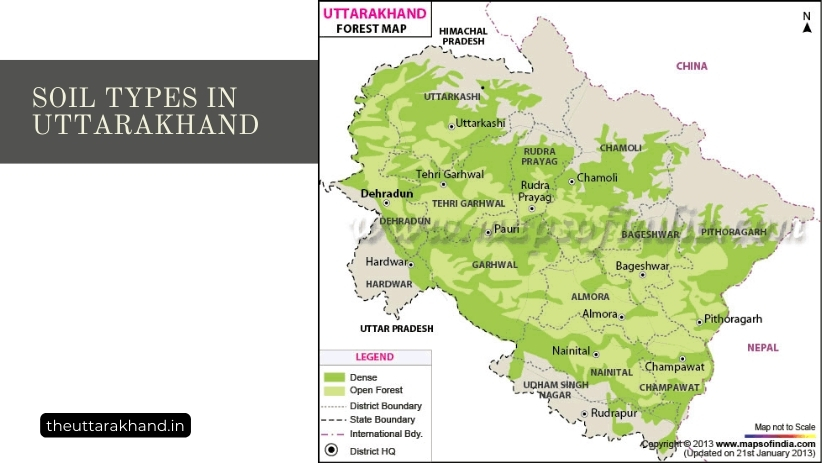
Fig 1: Soil Map of Uttarakhand showing distribution of major soil types
Soil Erosion
Due to the fragile Himalayan landscape, soils in Uttarakhand are highly prone to erosion. The major types of erosion are:
1. Sheet Erosion
Uniform removal of soil from sloping lands by runoff water. Common on steep cultivated slopes.
2. Rill Erosion
Occurs when runoff water accumulates and forms small channels. Common is agricultural lands.
3. Gully Erosion
Deep channels or gullies formed by concentrated runoff on slopes. Common in Siwalik foothills.
4. Landslides
Mass movement of rock and soil on unstable steep slopes, aggravated by deforestation.
Soil Conservation
To control soil erosion and improve fertility, various soil conservation measures are employed:
- Contour bunding and terracing
- Afforestation of barren slopes
- Crop rotation and cover cropping
- Mulching to prevent splash erosion
- Check dams and embankments
- Regulation of grazing
Soils in Different Regions
1. Tarai – Bhabar
- Alluvial soils, rich in nutrients
- Highly productive for agriculture
- Prone to waterlogging
2. Siwaliks
- Brown forest soils, moderately fertile
- High erosion due to steep slopes
- Scrub forests for soil conservation
3. Middle Himalayan Valleys
- Alluvial soils in valley bottoms, high fertility
- Brown forest soils on valley sides, moderate fertility
- Terrace cultivation on valley slopes
4. Higher Himalayas
- Podzolic soils under temperate forests
- Alpine meadow soils used for grazing
- Fragile soils prone to landslides
Soil Quality Issues
Some issues related to soils in Uttarakhand:
- Rapid loss of topsoil due to unsustainable land use
- Low organic matter content in hill soils
- Acidification of soils due to heavy rainfall
- Micronutrient deficiencies (Zn, B, Mo etc.)
- Contamination from agricultural chemicals
- Loss of soil fertility impacting farm productivity
Conclusion
The soils in Uttarakhand are diverse, ranging from the fertile alluvial soils in the plains to fragile alpine soils in higher reaches. The Himalayan landscape facilitates high rates of erosion, making soil conservation essential. With increasing pressure on land, maintaining soil health is crucial for ecological stability and agricultural sustainability in the state. Sustainable land management practices need to adopted on priority basis.