History of Tehri Garhwal : The Garhwal Kingdom, Tehri State and Independence
History of Tehri Garhwal : The Garhwal Kingdom, Tehri State and Independence
History of Tehri Garhwal
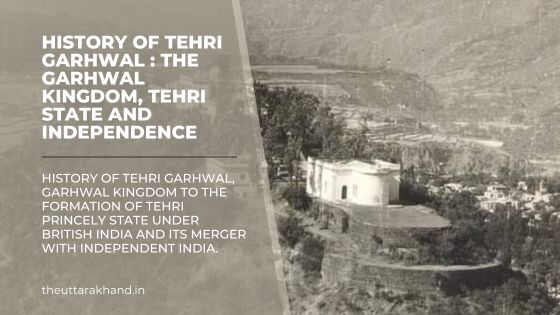
History of Tehri Garhwal : Tehri Garhwal district, nestled in the Garhwal Himalayas of Uttarakhand, has a long and rich history. It was an important part of the Garhwal kingdom, ruled by the Panwar dynasty, and later became the princely state of Tehri before merging with independent India in 1949. This article traces the history of Tehri Garhwal from the medieval Garhwal kingdom to the Tehri state under the British Raj.
History of Tehri Garhwal : The Garhwal Kingdom
History of Tehri Garhwal : The Garhwal kingdom was founded in 823 AD when Kanakpal became its first ruler. For over a thousand years, Garhwal was ruled by the Panwar (or Parmar) dynasty, with occasional interruptions by the Raikas and the Chand kings.
Early History
The early history of Garhwal is not well documented. Local legends and folk tales suggest that the Panwar Rajputs, who dominated the region, arrived from Gujarat or Rajasthan. The first capital was at Chandpur Garhi, later shifted to Srinagar (in Pauri Garhwal). The kingdom expanded through marital alliances and military conquests. By the 13th century, it covered most of what is now Tehri Garhwal district.
Medieval History
In the medieval period, Garhwal faced repeated attacks from the Malla kings of western Nepal. King Ajai Pal (1316-1372) repelled these invasions and extended his kingdom’s boundaries. His successor, Ajay Pal II, defeated the Muslim ruler of Delhi, Firoz Shah Tughlaq. For a brief period, the Raika dynasty ruled Garhwal in the 15th century before the Panwars regained control.
Mughal Relations
The Mughal emperors took great interest in the hill states, including Garhwal. Many Mughal princes visited Srinagar as a summer retreat. The Garhwal kings gradually accepted Mughal suzerainty but retained internal autonomy.
Gorkha Invasion
In 1803, the Gorkhas from Nepal captured parts of Garhwal. The king, Pradyumna Shah, was killed in battle. But Garhwal resistance continued from mountain fortresses. The British East India Company intervened in the Anglo-Nepalese War (1814-1816) and drove the Gorkhas east of the Kali river.
Tehri State and the British Raj
After the Gorkha retreat, Garhwal was divided into British Garhwal (under direct colonial rule) and the princely state of Tehri Garhwal.
Formation of Tehri State
The British restored the son of the former king, Sudarshan Shah, to the throne of Tehri in 1815. It became a British protected princely state, but the king had autonomy over internal affairs. The new capital was established at Tehri town.
Administrative Reforms
Sudarshan and his successor, Kirti Shah (r. 1826-1874), introduced administrative reforms on the British model – courts, police, land revenue, municipalities etc. This transformed Tehri into a modern state. Kirti Shah also promoted trade, built new roads and reconstructed the royal palace at Narendranagar.
Later History
Kirti Shah’s successors – Pratap Shah (r. 1874-1929), Narendra Shah (r. 1929-1946) and Manvendra Shah (r. 1946-1949) – carried forward modernization and economic development in Tehri. But the early 20th century saw growing demands for democratic reforms and self-rule. The popular protests culminated in Tehri’s merger with independent India on 1 August 1949.
Conclusion to History of Tehri Garhwal
History of Tehri Garhwal : Tehri Garhwal’s history mirrors the eventful past of the entire Garhwal Himalayan region – early kingdoms, medieval warfare, Mughal suzerainty, Gorkha invasion and finally integration with British India. The modern-day district preserves the cultural and political legacy of the former Garhwal kingdom and the princely state of Tehri.