Important Places in Champawat
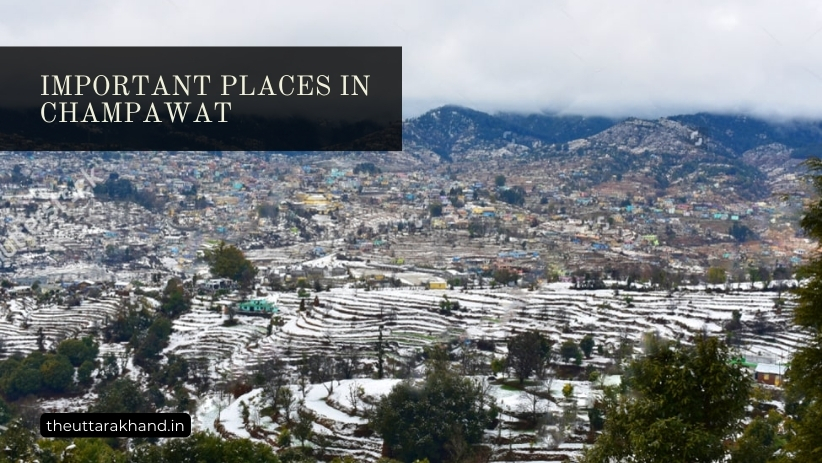
Important Places in Champawat
Important Places in Champawat
Important Places in Champawat : Champawat is situated 1615 meters above sea level. Champawat, once the capital of the rulers of the Chand dynasty, is famous for its natural beauty and well known temples. The ancient fort, now houses headquarters of the Tehsil office.
A historical spot, Champawat has many well known temples of high artistic value. The Baleshwar temple is the noted attraction of Champawat. The Nagnath temple at Champawat is also an excellent example of ancient architecture of Kumaon.
History
The district gets its name from princess Champawati, the daughter of King Arjun Deo who ruled the region in historic time and had capital in Champawat. The folklores describe the significant presence of the region during Mahabharata period.
Barahi temple of Devidhura, Sapteshwar temple of Sipti, Hidimba-Ghatotkach temple and Tarkeshwar temple of Champawat town are believed to date back to Mahabharata era.
The region was once ruled by the dynasty of Chand Rulers. They built lots of temples and ancient monuments in their ancient capital. So these monuments are the greatest attractions for the tourist peoples now days.
Baleshwar, Devidhura, Pancheshwar, Poornagiri temple are few such architectural building which built by the Chand dynasty.
Geography
Champawat district, geographically divided into terai, shivalik and high mountain ranges is widely appreciated as the origin of culture and religion in uttarakhand state. Varied in geography, champawat situates between 200-2000 meters above sea level experiencing different types of climate and weather in different heights.
The beautiful region housing ancient temples and preserving original culture as part of life, champawat maintains its flavor in language, culture and tradition.
Sub Division
Lohaghat, Pati, Shri Poornagiri, Champawat.
Tehsil
Pati, Shri Poornagiri, Champawat, Lohaghat, Barakot.
Block
Barakot, Champawat, Pati, Lohaghat.
Important Places
Champawat – Champawat is situated 1615 meters. above sea level. Champawat, once the capital of the rulers of the Chand dynasty, is famous for its natural beauty and well known temples. The ancient fort, now housesheadquarters of the Tehsil office. A historical spot, Champawat has manywell known temples of high artistic value. The Baleshwar temple is the notedattraction of Champawat. The Nagnath temple at Champawat is also anexcellent example of ancient architecture of Kumaon. ‘Ek Hathiya Ka Naula’is said to have been constructed in just one night by the one handed artisan.The story of Gollu Devta is also associated with Gorilla Chaur ofChampawat.
It was in Champawat that Lord Vishnu is said to have appearedas ‘Kurma avatar’ (incarnation as tortoise). This hill is also known as Mt.Kandev. There is a small fort at Champawat. Jim Corbett had come to thisregion in the first decade of the twentieth century in order to hunt for maneating tigers.The very first story of his first book (Man Eaters of Kumaon) isrelated to Champawat.
Devidhura – This area is commonly known as Varahi Temple, whereBagwal is practiced on the day of Raksha Bandhan. The famous Writer JimCorbett’s Book ‘Temple Tiger’ as associated with devidhura temples. It isone of the locations chosen for 13 District 13 Destination by the StateGovernment.
Nagnath Temple –Worship place for Lord Shiva, one of the finestexample Of Kumaon Architecture
Ek Hathiya Naula –It is example to showcase the master craft, which isformed by one artisan.
Baleshwar Temple –Worshipping God of Baleshwar Temple is LordShiva. It is one of the famous works of Chand Rulers in terms Of the workcraft and its size. However there is no Exact idea For archeologists when thiswas built, but it is guessed to be between 10–12 Century A.D.
Kranteshwar Mahadev – Located in the eastern Champawat, It is alsocalled Kurmapad Or Kandev.
Shri Poornagiri
Introduction
The festival season in Purnagiri Temple starts in the month of March-April Navratri Season. The temple area is surrounded by The river Kali, its islands, township of Tanakpur and various migrants villages. At a height of 3000 mts. above sea level, Purnagiri temple is visited throughout the year by devotees from all parts of the country, particularly during Chaitra Navratri in the month of March – April.
From Purnagiri, also known as Punyagiri, the river Kali descends into the plains and is known as Sharda. The south– western part of ‘Punya Parvat’ can be seen from this place. Another ascent ends at the TRC of Tanki. The region of temporary shops and residential huts start from this place upto Tunyas. From the highest point (the temple) of Purnagiri hill the pilgrim can see the expanse of Kali, its islands, the township of Tanakpur and a few Nepali villages.
The old Buram Deo Mandi is very close to Purnagiri.
Purnagiri Temple
The festival season in Purnagiri Temple starts in themonth of March-April Navratri Season. The temple area is surrounded byThe river Kali, its islands, township of Tanakpur and various migrantsvillages. At a height of 3000 mts. above sea level, Purnagiri temple is visitedthroughout the year by devotees from all parts of the country, particularlyduring Chaitra Navratri in the month of March – April.
From Purnagiri, alsoknown as Punyagiri, the river Kali descends into the plains and is known asSharda. The south– western part of ‘Punya Parvat’ can be seen from thisplace. Another ascent ends at the TRC of Tanki. The region of temporaryshops and residential huts start from this place upto Tunyas. From the highestpoint (the temple) of Purnagiri hill the pilgrim can see the expanse of Kali, itsislands, the township of Tanakpur and a few Nepali villages. The old BuramDeo Mandi is very close to Purnagiri.
Lohaghat
Introduction
Located along river, Lohawatri and Tanakpur-Dharchula border road in an intermont basin. The name is said to recall a bloody fight in the neighbourhood. Originally, the place had been the cantonment for the 3rd Gurkhas, but was soon abandoned with the disappearance of outpost on the Nepal border in the east. It was earlier a centre of small European population. It has a local hydle power station.
The morphology and land use clearly reveal a typical pattern of a small service centre. It is a street-town with more than 90% of the settlements strung along both the sides of the main bazar extending north-south. At an elevation of 1706 m. it is a centre of historical and mythological importance.
In 1841, so overcome was Pilgrim (Barron) by its beauty, that he had surprised why the Government of India was not developing it as its summer capital. In summer season Lohaghat is full of Burans flowers.
Lohaghat
Lohaghat – Located along river, Lohawatri and Tanakpur-Dharchulaborder road in an intermont basin. The name is said to recall a bloody fight inthe neighbourhood. Originally, the place had been the cantonment for the 3rdGurkhas, but was soon abandoned with the disappearance of outpost on theNepal border in the east. It was earlier a centre of small European population.It has a local hydle power station. The morphology and land use clearlyreveal a typical pattern of a small service centre. It is a street-town with more than 90% of the settlements strung along both the sides of the main bazarextending north-south. At an elevation of 1706 m. it is a centre of historicaland mythological importance. In 1841, so overcome was Pilgrim (Barron) byits beauty, that he had surprised why the Government of India was notdeveloping it as its summer capital. In summer season Lohaghat is full ofBurans flowers.
Barakot
Introduction
Barakot is a block in Champawat district in the state of Uttarakhand, India. It is located near Nepal border.
Some of the important places in Barakot block are:
Gurdwara Reetha Sahib
Here, Guru Nanak Dev had an encounter with Nath yogis whom he tried to bring to the path of active humanitarian service along with remembrance of God’s Name. It is located at the convergence of Lodhiya and Ratiya rivers, near Deyuri village.
The story is not mentioned in the Janamsakhis, but locally a strong tradition has grown that Guru Nanak Dev miraculously made the normally bitter fruit of a soapnut tree sweet for Bhai Mardana to feed on. A soapnut tree (not the original one) is still here and pilgrims are given prasad of sweet soapnuts.
However, the common belief that the nuts of only the one branch, under which the Guru had sat, are sweet is not true nor are all the nuts given as prasad from this one tree. About ten kilometers from the Grudwara, there is a tract of land where such trees are grown and their fruit is collected and brought to replenish the Gurdwara’s stock of prasad. It is called Nanak Bagichi.
Jod Mela is organized here every year in summers.
Baleshwar Temple
Baleshwar, situated at Champawat is the most artistic temple of the district. There are evidences that the group of temples dedicated to Baleshwar, Ratneshwar and Champawati Durga were built during the reign of Chand dynasty. The biggest Shivalinga of Kumaon, measuring 108 ft in circumference, is installed in this temple. An inscription dated 1153 AD (1210 Vikram Samvat) is found here.
Conclusion to Important Places in Champawat
Champawat district in Uttarakhand houses many historically and religiously important places like Champawat town, Purnagiri Temple, Lohaghat, and Gurdwara Reetha Sahib in Barakot. It preserves the ancient culture and architectural marvels of the Chand dynasty that once ruled the region. The beautiful temples, gurdwara, and breathtaking natural beauty makes Champawat an attractive tourist destination in Uttarakhand.
Important Places in Champawat, the key important places in Champawat district are:
Champawat – Baleshwar Temple, Nagnath Temple, Ek Hathiya Naula, Devidhura Shri Poornagiri – Purnagiri Temple Lohaghat – Scenic hill town Barakot – Gurdwara Reetha Sahib, Baleshwar Temple