Medieval Uttarakhand History: Ruling Dynasties, Society, Economy
The medieval history of Uttarakhand saw the rise and fall of ruling dynasties like the Katyuris, Chands, Panwars and Gorkhas.
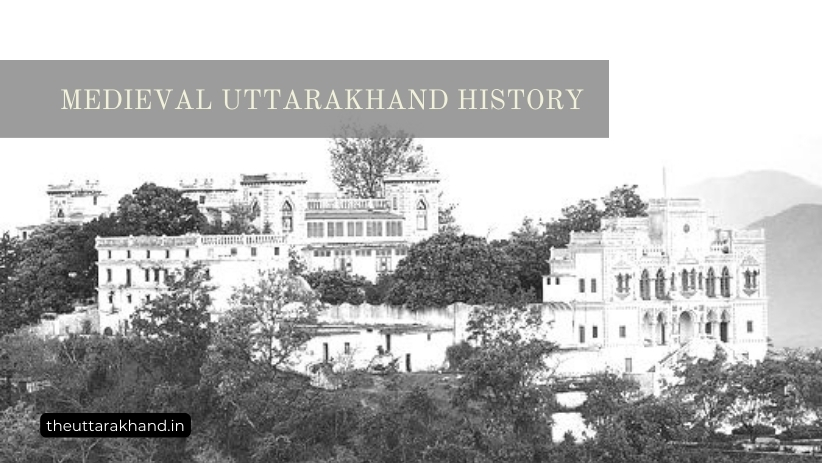
Medieval Uttarakhand History
Introduction to Medieval Uttarakhand History
Medieval Uttarakhand History : The medieval period in Uttarakhand spans from 8th century AD to 18th century AD before the advent of British rule. This period saw the rise and fall of many ruling dynasties in Kumaon and Garhwal regions of present-day Uttarakhand.
Some of the key highlights of medieval Uttarakhand are:
Key Highlights
- Emergence of the Katyuri dynasty (700-1200 AD)
- Chand dynasty rule in Kumaon (1200-1790 AD)
- Panwar/Parmar dynasties rule in Garhwal (885-1804 AD)
- Gorkha invasion and rule (1790-1815 AD)
- Advent of the East India Company
In the sections below, we will explore the history of medieval Uttarakhand in detail along with the various ruling dynasties.
The Katyuris (700-1200 AD)
Origin
The Katyuri dynasty is regarded as the first ruling dynasty of Kumaon. They originated near Joshimath area of present-day Chamoli district.
Brihat Katyayan was the founder of the Katyuri dynasty. According to legends, he was born to sage Vashista and goddess Sati in 7th century AD.
Extent of Kingdom
The Katyuris established their kingdom in the 7th century AD. Their kingdom extended from mid-Himalayas to Terai plains covering whole of Kumaon, Garhwal and western Nepal regions.
At its peak, the Katyuri kingdom extended from Tibet in the north to Ganga plains in the south, and from Yamuna in the west to Gandaki (Nepal) in the east.
Administration & Society
The administrative structure was centralized and hereditary in nature.
The Katyuri society was divided into four classes or varnas – Brahmins, Kshatriyas, Vaishyas and Shudras.
People were engaged in agriculture, cattle rearing, trade and commerce for livelihood. Both Shaivism and Vaishnavism sects of Hinduism flourished.
Economy
- Agriculture was the mainstay of economy. Rice, wheat, barley were chief crops.
- Cattle rearing was an important subsidiary occupation.
- Trade with Tibet via Mana, Niti and Lipu Lekh passes. Exchanged salt, wool, borax with grain, spices and handicrafts.
Downfall of Katyuris
The decline of Katyuri dynasty began in 11th century AD due to several reasons:
- Frequent attacks from neighboring kings of Gujarat, Maharashtra and Bengal.
- Internal family conflicts and court conspiracies.
- Natural calamities like earthquake and epidemics.
Finally, the Katyuri dynasty came to an end in 1200 AD.
The Chands (1200-1790 AD)
After the fall of Katyuris, Kumaon region passed into the hands of many dynasties before Chand dynasty established control over it in 13th century.
Origin of Chands
The Chand dynasty descended from a common ancestor, Chand, who came to Kumaon in 10th century from Kannauj. For about three centuries, they settled in Chandpur near Karnaprayag in Garhwal before gaining control over Kumaon.
Balo Kalyan Chand gained control over Kumaon region in 13th century AD. He made Almora the capital city of Kumaon kingdom.
For over five centuries, the Chand dynasty ruled over Kumaon in an uninterrupted manner.
Administration under Chands
The administration was centralized in nature. The king was supreme authority. Chiefs called Thokdars, Diwans, Kazis etc assisted the king.
The empire was divided into Garhs or forts. Each fort was administered by noble called Rawal. Below him was village headman called Patwari who collected taxes.
Society & Economy
- The Kumaoni society comprised of four varnas – Brahmins, Rajputs, Vaishyas and Shudras.
- Land revenue was main source of income. One-sixth of produce was charged as tax.
- Trade was largely localized. Exchanged local produce with salt, borax and wool from Tibet.
Downfall of Chands
After the death of Deep Chand in 1698, the Chand dynasty rulers became pleasure seeking and insensitive towards people.
Finally, in late 18th century the Gorkhas from Nepal invaded Kumaon and overthrew the Chand dynasty.
The Panwars of Garhwal (885-1804 AD)
The Panwar dynasty, also called Parmars, originated from Malwa region in Madhya Pradesh. The dynasty derived its name from Paramaras, a clan of Rajputs.
Origin of Panwars
The Panwars entered present day Garhwal region in 823 AD via Doti (Kumaon). They established small principalities in Garhwal-Kumaon along with local chieftains.
Over the centuries, the Panwars subjugated all the local rulers and chieftains and established a unified Garhwal Kingdom by mid 15th century.
Extent & Administration
By 18th century, Garhwal Kingdom extended from Satluj river in west to Kali river in east covering most of Tehri Garhwal, Pauri Garhwal, Rudraprayag and Chamoli districts of present day Uttarakhand.
The king was the supreme authority and owner of all lands. The empire had two divisions called Tarai and Hilly areas. Each were under control of military chiefs.
Society & Economy
The Panwar society was divided into three classes – Rajputs, Brahmins and Dalits. Polygamy was common among royals and polyandry among peasants.
Agriculture was main occupation. Produced crops like wheat, rice, pulses, millets as well as cash crops like sugarcane and cotton. People also reared sheep, goats and buffaloes. Trade was limited to Tibet via border villages like Mana, Niti and Lipu Lekh.
Downfall of Panwars
Frequent Nepalese attacks weakened the Garhwal empire. Finally, in 1803 the Gorkhas annexed whole of Garhwal kingdom. In early 19th century Garhwal came under British rule.
Gorkha Rule (1790-1815 AD)
The Gorkhas were a martial Hindu clan inhabiting Gorkha region of present-day Nepal.
Invasion of Kumaon-Garhwal
In late 18th century, the Gorkhas invaded Kumaon and overthrew the Chand dynasty. Subsequently, they also annexed the Garhwal Kingdom of Panwar rulers after two years of struggle.
For next 25 years, Kumaon-Garhwal remained under brutal Gorkha military rule. The region witnessed huge destruction as Gorkhas extracted heavy taxes and tributes.
Resistance to Gorkhas
The Kumaonis under leadership of brave Gurkha fighter Dhoniya Sahu of Almora waged relentless war against the Gorkhas.
In Garhwal region, the local chieftains like Pradyumanshah, Puran Shah and many common people fought the Gorkhas at Nalapani, Thauldhar and other places before being martyred.
Finally, the East India Company defeated the Gorkhas in 1815 and drove them out of Kumaon-Garhwal. This marked the end of Gorkha rule.
Advent of East India Company
After the defeat of Gorkhas, British signed the Treaty of Sugauli with Nepal in 1816. As per this treaty, Kumaon and west of Kali river was ceded to the British.
This marked the advent of British rule in Uttarakhand. Garhwal and Kumaon came under direct control of British while Tehri Riyasat retained internal autonomy.
Conclusion to Medieval Uttarakhand History
Medieval Uttarakhand History : The medieval period saw political turmoil in Uttarakhand with the rise and fall of Katyuri, Chand, Panwar and Gorkha rulers in quick succession.
By early 19th century the British established their rule heralding the modern period in Uttarakhand’s history.
Medieval Uttarakhand History:
Q: Which dynasties ruled Uttarakhand during the medieval period?
A: The major ruling dynasties of medieval Uttarakhand were the Katyuris (700-1200 AD), Chands (1200-1790 AD) and Panwars (885-1804 AD). The Gorkhas also invaded and ruled between 1790-1815 AD.
Q: What was the society and economy like in medieval Uttarakhand?
A: The society was divided into classes based on the varna system. Agriculture was the mainstay while trade with Tibet also existed. Mining of minerals was also practiced.
Q: When did the medieval period in Uttarakhand begin and end?
A: The medieval period in Uttarakhand spanned from 8th century AD with the rise of the Katyuri dynasty to early 19th century before the advent of British rule.
Q: What led to the downfall of the Katyuri dynasty in Uttarakhand?
A: The Katyuri dynasty went into decline by 11th century due to frequent external attacks, internal conflicts and natural calamities. They finally ended in 1200 AD.