Prehistoric to Ancient History of Uttarakhand
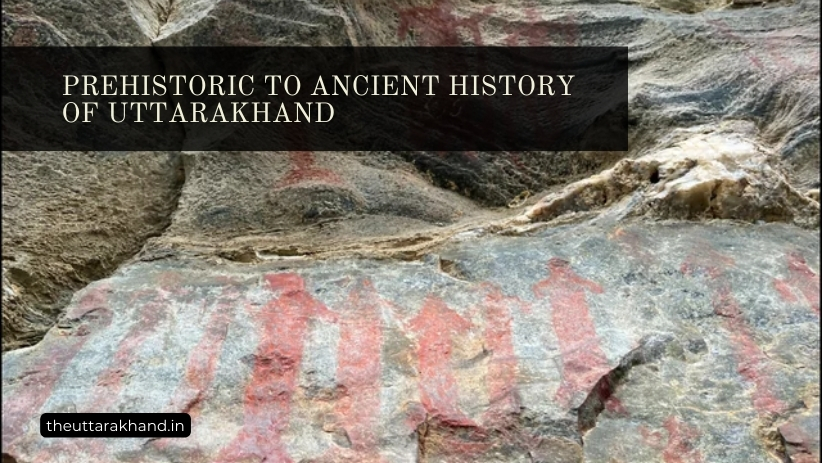
Prehistoric rock art at Lakhudiyar, Almora district, Uttarakhand
Prehistoric to Ancient History of Uttarakhand
Prehistoric to Ancient History of Uttarakhand : Uttarakhand, nestled in the foothills of the Himalayas, has a long and storied history. Though earlier believed to be an uninhabited, harsh land, research has uncovered evidence of human settlement since prehistoric times. Uttarakhand’s strategic location along major river valleys and trade routes allowed diverse groups and cultures to mix and mingle over the millennia. This article will provide an overview of Uttarakhand’s history from the prehistoric era through ancient times.
Prehistoric Uttarakhand
Earliest Evidence of Settlement
Though Uttarakhand’s mountainous terrain was long considered inhospitable, archaeological evidence proves the region was inhabited since prehistoric times. Lower Paleolithic stone tools and artifacts have been found along the Yamuna, Alaknanda, and Eastern Ramganga rivers and in parts of Nainital district, indicating the presence of early humans.
Stone Age Culture
Additional Stone Age sites discovered across Uttarakhand provide insight into the lifestyle and culture of early inhabitants. Painted rock shelters depicting dancing, hunting, and social rituals demonstrate the emergence of cultural practices. Burial sites uncovered in Garhwal region point to spiritual beliefs. And numerous cup-and-ring rock art sites mirror those found in Kashmir’s Burzahom, further connecting Uttarakhand to the broader cultural developments of ancient India.
Arrival of New Groups
Indo-Aryan Migration
Uttarakhand’s location along major trade routes led to an influx of new groups over the centuries. During the proto-historic and Harappan period, Indo-Aryan groups like the Kiratas, Tanganas, Khasas, Darads, and Kulindas migrated to the region, mixing with earlier inhabitants. These tribes and clans formed the basis of later kingdoms and cultures.
Rise of Regional Powers
Kuninda Kingdom
The Kunindas emerged as a major regional power from approximately the 6th century BCE to the 3rd century CE. Their capital was located at Srinagar, identified with ancient Subansupur mentioned in the Mahabharata. The Kunindas left a rich material culture including coins, inscriptions, and monumental architecture.
Kushanas, Mauryas, Guptas
Over the centuries, Uttarakhand fell within the broader sphere of influence of imperial powers like the Kushanas, Mauryas, and Guptas. Evidence like Kushana coins and Ashoka’s Kalsi Edict point to extended periods of contact and exchange between local and centralized authorities.
Links to Epic Traditions
Uttarakhand maintains strong links to India’s epic traditions. Sites mentioned in the Mahabharata tie to local legends about the Pandavas’ exile and ancestors like Bhagiratha. The region’s remote forest hermitages helped cement its place within spiritual narratives as the mythic tapobhumi, or land of sages and ascetics.
Conclusion to Prehistoric to Ancient History of Uttarakhand
Prehistoric to Ancient History of Uttarakhand : While previously discounted as an uninhabitable wasteland, modern archaeology demonstrates Uttarakhand’s deep history of human settlement since prehistoric times. Diverse cultural groups mixed and exchanged ideas, practices, material culture in the region for millennia, drawn by its strategic bridges to the broader Indian subcontinent. Uttarakhand’s vibrant history is integrally linked to the broader development of South Asian civilizations.