Stone Age, Rock Art and Rock Carvings in Uttarakhand
Stone Age, Rock Art and Rock Carvings in Uttarakhand
Stone Age, Rock Art and Rock Carvings in Uttarakhand
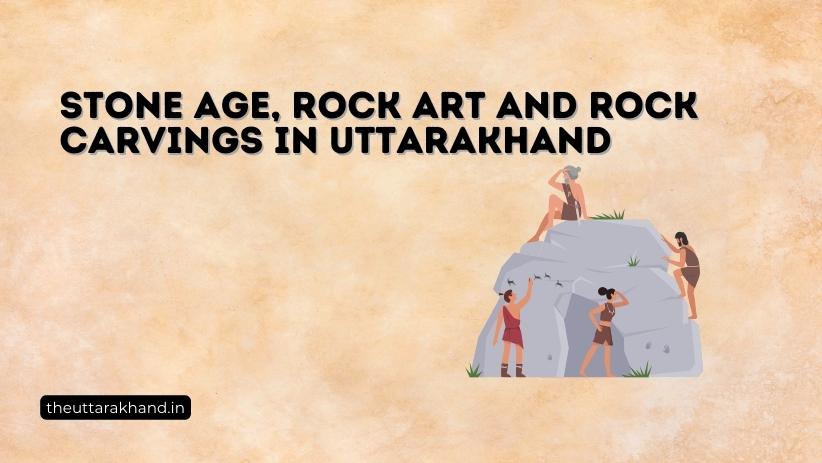
Stone Age, Rock Art and Rock Carvings in Uttarakhand : Uttarakhand, nestled in the lap of the Himalayas, has a rich prehistoric heritage. Archaeological evidence indicates that the region was inhabited since the Stone Age. Numerous stone tools, rock shelters, cave paintings and rock carvings have been discovered that provide insights into the life of prehistoric humans in Uttarakhand.
This article comprehensively covers various aspects related to the prehistory of Uttarakhand – the Stone Age culture, rock art, and rock carvings discovered in the region. It discusses the nature of archaeological evidence, techniques used, important sites, subject matter and interpretation of rock art, its significance, and what these prehistoric remains tell us about the life and times of early human settlement in Uttarakhand.
Stone Age in Uttarakhand
Lower Paleolithic Culture
The Lower Paleolithic culture, characterized by massive core tools such as handaxes and cleavers, is found distributed sporadically in the Himalayan foothills and valleys of Uttarakhand.
Important Sites: Soan valley near Dehradun, Srinagar and Pauri regions in Garhwal.
Tools: Handaxes, cleavers, choppers, scrapers, Borers etc. made on quartzite, sandstone and limestone.
The crude nature of tools indicates lack of standardization and basic skills. They were made by the process of simple flaking. The scattered finds suggest short-term encampments of hunter-gatherer groups.
Middle Paleolithic Culture
The Middle Paleolithic witnessed significant progress in tool making techniques. The tools were made on fine-grained quartzite by the prepared core technique and are comparatively more standardized.
Important Sites: Lakhamandal near Dehradun, Chakrata region of Dehradun district.
Tools: Points, scrapers, borers etc. The tools were probably hafted, indicating use of wooden handles for better grip.
The Middle Paleolithic people were more organized hunters and lived for longer durations at the sites. They probably exploited seasonal resources in their habitat. Fire was possibly used as several tools showed signs of intentional heating. The Middle Paleolithic culture represents more permanent human occupation of the Lesser Himalayan zone.
Upper Paleolithic Culture
This culture is distinguished by the appearance of blades, use of microblade technology and bone tools. The tools were made on fine grained siliceous materials by advanced techniques like the microblade technology demonstrating increased skills.
Important Sites: Lakhamandal near Dehradun, Chakrata region of Dehradun district.
Tools: Parallel sided blades, points including the distinctive penknife points, scrapers and borers made on chert, agate and jasper. Bone tools include points, borers and scrapers.
The Upper Paleolithic people were highly organized hunters who probably made seasonal movements between summer camps in the hills and winter camps in the valleys along rivers. They largely subsisted on wild herbivores. The culture represents a fully established human occupation of the Lesser Himalayan hills.
Rock Art in Uttarakhand
Rock art refers to paintings and engravings made by prehistoric and early historic people on stone surfaces such as cave walls, boulders and rock shelters. Hundreds of rock art sites with thousands of figures have been discovered in Uttarakhand.
Distribution
Rich concentrations found along the tributaries of major rivers like Tons, Yamuna, Ganga, Kali, Sarju and their intersections. The heights range from 2000-2500m above msl.
The main concentration areas:
- Tons valley: Jaunsar-bawar, Mori and Netwar regions
- Yamuna valley: Along the routes to Kedarnath, Badrinath, Gangotri and Yamunotri shrines.
- Alaknanda & Mandakini valleys: Along the routes to Kedarnath and Badrinath shrines.
- Kali & Sarju valleys
Styles
Line drawings made in red, white or black pigments. Two main styles:
Naturalistic style – Detailed and realistic depictions of animals, humans, material culture etc.
Schematic style – Linear representations, extremely simple and symbolic.
Stylistic sequence – The naturalistic style is older followed by the schematic style.
Themes
Wild animals – leopard, tiger, elephant, bison, deer, boar etc. constituting hunting scenes.
Livestock animals – cattle, horses, sheep and dogs.
Human figures – stylised as stick figures, detailed images rare. Engaged in hunting, dancing, processing food, honey collection etc.
Material culture – bows, arrows, spears, swords etc.
Geometric designs – dots, circles, squares, tridents etc.
Symbols – wheel, swastika, trishul, footprints etc.
Scripts – Brahmi and Devanagari.
Chronology
On stylistic comparison with Vindhyan rock art, the paintings are tentatively assigned to a broad date range:
- Naturalistic style – Mesolithic (10000 BP – 6000 BP)
- Schematic style – Neolithic to Early Historic (6000 BP – 2000 BP)
But few paintings have been directly dated.
Significance
- Represent the earliest form of artistic expression by prehistoric people
- Give insights into lifestyle, culture, environment and ecology of the region
- Show continuity of cultural traditions from prehistory to early historic times
Rock Carvings in Uttarakhand
Rock carvings have been discovered at over 50 sites in Uttarakhand, represented by petroglyphs and inscriptions.
Petroglyphs
Engravings on stone slabs depicting symbols and figures.
Distribution: Mainly found in Dehradun and Tehri districts.
Important sites – Lakhamandal (Dehradun) with over 2000 carvings discovered over a wide area.
Themes
- Anthropomorphs: Stylised human figures, body parts, masks etc.
- Zoomorphs: Animals including deer, elephant, scorpion etc.
- Geometric designs: Circles, squares, tridents, stars, swastika etc.
- Symbols: Footprints, wheel, trishul etc.
- Scripts: Brahmi and Devanagari inscriptions.
Chronology – Stylistic comparison with Vindhyan petroglyphs gives a tentative date range:
- Early carvings – Neolithic (6000 BP – 4000 BP)
- Later carvings – Chalcolithic to Early Historic (4000 BP- 1500 BP)
But very few petroglyphs have been directly dated. Scientific dating analysis is required for more accurate dating.
Inscriptions
Donative inscriptions in Brahmi and Devanagari recording religious gifts and invoking deities, found at over 15 sites.
They mention rulers of important dynasties – Katyuris, Chand Kings etc. providing historical information.
Examples
- Two donative inscriptions in Brahmi at Jageshwar dated between 4th-7th century CE mentioning the Katyuri kings.
- Inscriptions at Baijnath, Papdevara, Dwarahat etc.
Interpretation of Rock Art and Carvings
Archaeologists have attempted interpreting the rich repertoire of Uttarakhand’s rock art and carvings:
- Represent stone age religious beliefs and practices
- Reflect social and cultural life of prehistoric communities
- Show continuity of cultural traditions from prehistory to early historic times
- Associated with trade routes followed by prehistoric communities
However, definite interpretations remain unclear owing to the wide time span over which they were created and lack of adequate scientific dating evidence.
Conclusion to Stone Age, Rock Art and Rock Carvings in Uttarakhand
Stone Age, Rock Art and Rock Carvings in Uttarakhand : The numerous stone age tools, rock art sites and rock carvings discovered across Uttarakhand provide evidence of long human occupation of the region since Lower Paleolithic times. They demonstrate highly advanced skills and cultural sophistication of prehistoric communities reflected in the tool making techniques, detailed artistic representations and complex symbols depicted. Scientific dating analysis of these remains can give more definitive information about stages in human cultural evolution in the region. The prehistoric heritage definitely makes Uttarakhand one of the most important archaeological regions in South Asia.
FAQs on Stone Age, Rock Art and Rock Carvings in Uttarakhand:
What is rock art in Uttarakhand?
Rock art refers to prehistoric paintings and engravings on cave walls, rock shelters and boulders in Uttarakhand.
What do the rock art depict?
The paintings and engravings depict wild animals, hunting scenes, human figures, material culture, scripts, symbols etc.
How old is the rock art?
On stylistic comparison, the rock art has been assigned dates from Mesolithic to Early Historic period (10000 BP – 2000 BP).
Where have rock art been found in Uttarakhand?
Rich concentrations discovered along tributaries of Tons, Yamuna, Ganga, Kali, Sarju rivers at 2000-2500 m heights.
What is the significance of rock art?
It represents earliest artistic expression and provides insights into Stone Age lifestyle, culture, ecology of the region.