Tehri Terrain and physiography

Tehri Terrain and physiography
Tehri Terrain and physiography
Tehri Terrain and physiography : Tehri Garhwal district is located in the Garhwal region of Uttarakhand state in northern India. The district spans over an area of 3,642 sq km and has a population of 616,409 as per 2011 census.
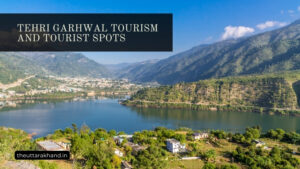
The terrain and physiography of Tehri Garhwal district is dominated by the mighty Himalayan mountains, with the district encompassing parts of both the Great Himalaya range as well as the Lesser Himalaya range. The district exhibits great diversity in its landscape, with lofty snow-clad peaks, glaciers, deep river valleys, hills, plateaus and some plains.
Major Physiographic Divisions
Tehri Terrain and physiography : The physiography of Tehri Garhwal can be divided into three major divisions:
1. The Great Himalayan Range
This forms the northern boundary of the district bordering Tibet/China. The Great Himalayan peaks dominate the landscape here with an average height of 6,000 m. Some of the major peaks are Bandarpunch (6,316 m), Swargarohini (6,252 m), Black peak (6,386 m), etc.
This region lies perpetually under snow and has several large glaciers like Gangotri, Bhagirathi Kharak, Chaturangi, etc. The Bhagirathi river originates from the snout of Gangotri glacier. This region is almost uninhabited due to the rugged terrain and freezing temperatures.
2. The Lesser Himalayan Range
This runs parallel to the Great Himalayas in the south, with average heights between 1,500-3,000 m. Some of the major ranges are Nagtibba range, Mussoorie range, Dodital range, etc. The region has steep hills, valleys and plateaus.
The Bhilangna, Bhagirathi, Asiganga, Ganga rivers flow through this region carving out deep gorges. Several hill stations like Mussoorie, Dhanolti, Chamba, etc are located in this region. This region has moderate climate and is dotted by several towns and villages.
3. The Shiwalik Range
This forms the southernmost physiographic division bordering the plains. The altitude varies between 300-1,500 m with average height of 900 m. The region has low hills with wide valleys and terraces.
The Yamuna river flows through this region which exhibits sub-tropical climate. This region has higher temperatures than the middle and northern Himalayan ranges and is more densely populated with several towns like Narendranagar, Rishikesh, etc located here.
Prominent Mountain Ranges
Some of the prominent mountain ranges in Tehri Garhwal district are:
- Nag Tibba range – Forms the Mussoorie range in the Lesser Himalayas with average height around 3,000 m. The highest peak is Nag Tibba (3,022 m).
- Dodital range – Located at average height of 3,300 m with Dodital lake situated in a depression. Highest peak is Darwa Top (3,417 m).
- Bhagirathi range – Located at an average height of 4,500 m in the Great Himalayan range. Surrounds the origin of Bhagirathi river.
- Jadh Ganga range – Forms the watershed between Jadh Ganga river and Bhagirathi river valleys. Average height around 3,000 m.
- Asan range – Located at average height of 1,500 m in the Shiwalik range. Asan river and Yamuna river valleys lie on either side.
Major River Systems
The following are the major rivers flowing through Tehri Garhwal district:
- Bhagirathi – Originates from Gangotri glacier and is considered the source stream of Ganga. Major tributaries are Jadh Ganga, Bhilangna, Asiganga, etc.
- Bhilangna – Rises from the glaciers below Kedarnath and meets Bhagirathi at Devprayag. Has carved out a deep gorge.
- Yamuna – Rises from Yamunotri glacier and flows in southern side of the district. Tributaries are Asan river, Ganga canal, etc.
- Asiganga – Rises from Jamnotri glacier and meets Bhagirathi. Tributary of Bhagirathi river system.
- Jadh Ganga – Originates from Pindari glacier and meets Bhagirathi. Has formed a picturesque gorge.
Glaciers
Some of the major glaciers in Tehri Garhwal district are:
- Gangotri glacier – Largest glacier in the district and source of Bhagirathi river. Located in Uttarkashi district but a small part extends in Tehri.
- Bhagirathi Kharak glacier – Second largest glacier after Gangotri glacier at 40 sq km. Located close to Gangotri glacier.
- Chaturangi glacier – At the base of Chaturangi peak. Located at height of 4,500 m.
- Pindari glacier – Located at height of 3,600 m. Extends over 7 km and source of Pindari river.
- Khatling glacier – Situated at 4,500 m height below Khatling peak. Source of Bhilangna river.
- Meru glacier – Located below Meru peak at height of 4,500 m. Extends from 4,120 m to 3,800 m.
Prominent Lakes
Some well known lakes in Tehri Garhwal district include:
- Dodital – Picturesque freshwater lake situated at height of 3,024 m. Elliptical in shape spanning over 1 km length.
- Deoria Tal – Beautiful lake located at height of 2,440 m close to Chopta village. Sparkling green-blue water.
- Vasuki Tal – Located at 4,150 m height near Kedarnath wildlife sanctuary. Surrounded by Chaukhamba peaks.
- Nachiketa Tal – Scenic lake situated at 4,130 m height in Uttarkashi district near Tehri border. Crystal clear water.
Climate and Rainfall
Tehri Terrain and physiography : Due to extreme variation in altitude and terrain, there is significant diversity in climate across Tehri Garhwal district.
1. Great Himalayan Range
- Perpetual snow and glaciers. Arctic climate prevails with average temp. below freezing point. Heavy snowfall in winters.
2. Middle Himalayan Valleys
- Pleasant climate prevails in summer while winters are cold. Temp. varies from 35°C in summer to -2°C in winter. Good rainfall.
3. Shiwalik Range
- Sub-tropical climate with hot summers and mild winters. Temp. varies from 42°C in summer to 10°C in winter. Medium rainfall.
The average annual rainfall is around 2,000 mm mostly concentrated in summer months from June to September. Some areas in Great Himalayan range receive snowfall instead of rainfall.
Soil Types
The main soil types found in the region are:
- Mountain meadow soil – Found at higher altitudes with rich organic content. Good for cultivation of potatoes, paddy, wheat.
- Podzols soil – Sandy and acidic soil found in hilly oak and pine forests. Rich in iron and aluminum.
- Terai soil – Alluvial soil found near river valleys. Rich in potash, phosphorous and organic matter. Good for sugarcane, rice crops.
- Skeletal soil – Shallow soil found on steep slopes. Rich in gravel and stone contents. Sparsely cultivated.
Natural Vegetation
Natural vegetation in the region varies widely based on altitude and terrain and mainly consists of forests. The major forest types are:
1. Tropical deciduous forest
- Sal, Teak, Bamboo, Khair at 500-1,500 m height
2. Pine forest
- Chir Pine, Deodar, Oak found at 1,500-2,500 m height.
3. Alpine forests
- Fir, Spruce, Birch, Rhododendron above 3,500 m height.
At higher altitudes, there are alpine meadows and grasslands used for animal grazing. At even higher regions closer to snow line, there is sparse vegetation.
Land Use Pattern
The land use in Tehri Garhwal district is as follows:
- Forest area – 63%
- Land put to non-agricultural uses – 14%
- Barren and uncultivable land – 12%
- Area under permanent pastures – 5%
- Cultivable area – 4%
- Area under miscellaneous tree crops – 2%
Thus majority of land area is forested while only a small percentage is available for cultivation and permanent human settlement.
Mineral Resources
Tehri Garhwal district has deposits of the following minerals:
- Limestone: Large deposits found in Jaunpur-Nagnath area. Used in cement industry.
- Slate: Low grade slate is found which is used for roofing and flooring purposes.
- Graphite: Deposits found in Vikasnagar and Nasan areas. Used as refractory material.
- Magnesite: Low grade magnesite deposits found in Vikasnagar and Sahastradhara areas.
- Soapstone: Deposits found in Netwar area. Used in crafts industry.
Conclusion to Tehri Terrain and physiography
Tehri Terrain and physiography, Tehri Garhwal district exhibits great physiographic diversity from high altitude snow peaks to temperate river valleys and sub-tropical lower hills. The Bhagirathi, Yamuna, Bhilangna are major river systems that have carved out the landscape over millennia. There is a wide variation in climate, soil types, flora and fauna. The region is rich in natural beauty but lacks in cultivable land and infrastructure. Overall the geography and terrain provide immense scope for tourism industry.