Transport and Communication in Pithoragarh
Transport and Communication in Pithoragarh
Transport and Communication in Pithoragarh
Transport and Communication in Pithoragarh : Pithoragarh district is located in the eastern Himalayan region of Uttarakhand. Due to its remote location and mountainous terrain, developing good transportation networks has been a major challenge. However, over the years, the district has made good progress in expanding its transport and communication links.
The main modes of transportation available in Pithoragarh district are:
- Roadways
- Railways
- Airways
In addition, ropeways, helicopters and porter tracks provide important transportation access to remote areas.
Roadways
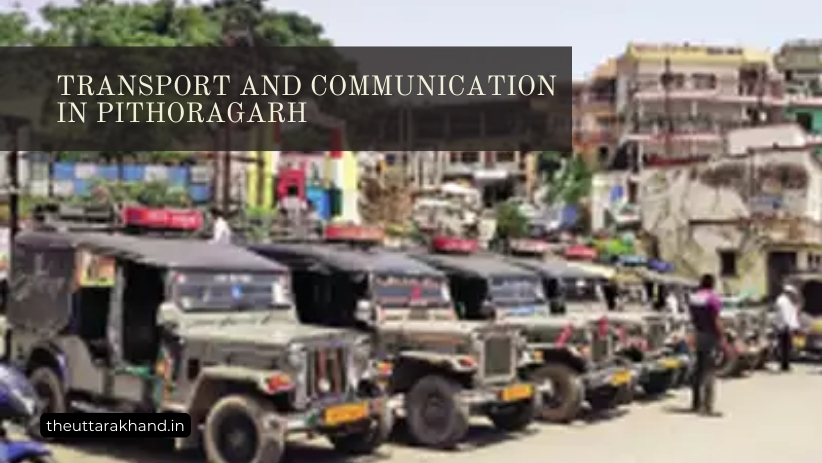
Road transport is the backbone of Pithoragarh’s transportation system connecting it to major cities and towns in Uttarakhand as well as neighbouring states.
The major roads in the district are:
- National Highway 125: Connects Pithoragarh to Haldwani, Kathgodam and Nainital in Kumaon region. It is the lifeline for the district.
- Pithoragarh-Gori Ganga-Tawaghat Road: Connects district to Dharchula and the Indian border at Lipulekh Pass.
- Munsiyari-Milam Road: Goes up to the historic Milam Glacier base camp.
- Road to Berinag: Connects Pithoragarh to the scenic hill station of Berinag perched at 7260 ft.
Several new roads are also being constructed under PMGSY scheme to connect remote villages and towns.
Impact of Improved Road Connectivity
- Easier transportation of goods and access to markets
- Better connectivity for tourists leading to rising tourism
- Access to healthcare and educational facilities for remote residents
- Overall boost to trade, commerce and economic development
However, roads have also raised concerns over disturbance to fragile Himalayan ecology. Proper planning is needed to balance connectivity and conservation.
Railways
There is no railway line in Pithoragarh district currently. The nearest railway stations are at Tanakpur (120 km) and Kathgodam (170 km).
Many remote areas still depend on age-old walking tracks to connect to roadheads and railheads. Porter and mule tracks continue to serve isolated villages not connected by motorable roads.
Air Connectivity
The district has an airstrip at Naini Saini which is used by small aircraft and helicopters. Pawan Hans helicopter services connect Pithoragarh to Haldwani, Delhi and Dehradun.
However, flights are infrequent and very costly, making it unviable for common people. There is a need to improve air services in the region.
Ropeways
Ropeways provide a sustainable transportation solution in the mountainous district. They are eco-friendly, require less land and can transport people and goods across steep gradients.
Some important passenger ropeways in Pithoragarh district are:
- Chaukori-Kausani Ropeway: Connects the two popular hill stations
- Ropeway to Chandak Hilltop: For pilgrims and tourists
Ropeways have immense potential for transportation and tourism development if properly utilized.
Porter Tracks
Human porters carrying headloads have been integral to mountain transportation since ancient times. Porter tracks continue to connect remote mountain villages to roadheads.
Some major porter tracks in the region are:
- Munsiyari-Milam-Ralam Track: Followed by traders for Indo-Tibetan trade
- Dharchula-Tinkar-Lipulekh Track: Connecting to Mansarovar in Tibet
- Track to Namik Glacier
These arduous tracks require days of walking but are lifeline for far-flung residents. Porter services also provide employment to locals.
Conclusion to Transport and Communication in Pithoragarh
Transport and Communication in Pithoragarh, Pithoragarh has made significant progress in transport and communication but much more remains to be done. While roads and ropeways have expanded connectivity, rail and air services need major upgrade. Porter tracks continue to serve remote communities indicating that all traditional and modern solutions must be optimally combined to provide sustainable transport across this challenging district.
The goal should be for infrastructure growth to not just bring goods and people, but also opportunities and development without disturbing Himalayan ecology. Then only can we say Pithoragarh is truly connected to the mainstream.