Himalayan Ethnicity Unveiled: Tracing Diverse Cultures and Migrations
The intermixing of indigenous tribes, Tibetan immigrants, and Indic and Central Asian migrants produced the ethnic and cultural mosaic of the Himalayan Ethnicity. Shaped by migration, trade, and empires, these groups forged unique identities while retaining ancient traditions. Their heritage continues to enrich the history of South Asia.
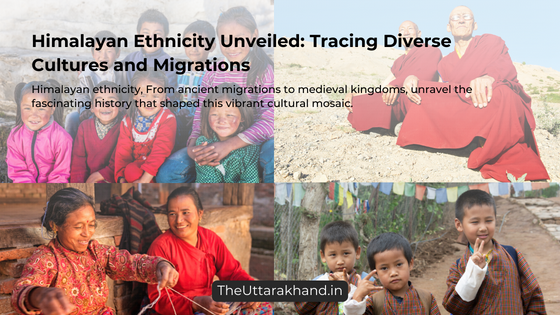
Himalayan Ethnicity Unveiled: Tracing Diverse Cultures and Migrations
Himalayan Ethnicity : The Himalayan mountain range stretches across northern India, Nepal, Bhutan, and Tibet, encompassing diverse cultures and ethnic groups. The origins and development of these Himalayan peoples have long fascinated scholars seeking to unravel their complex histories. This article explores some key aspects of Himalayan ethnography and history.
Early Migrations
The Himalayas served as a conduit for various migrations throughout history. Stone Age hunter-gatherers likely moved along Himalayan valleys and passes as early as 40,000 years ago. Neolithic farmers migrated from western China about 3,500 years ago, introducing agriculture, domestic animals, and new tools.
The Indo-Aryan peoples began arriving around 1500 BCE from Central Asia, displacing or assimilating earlier groups. Tibetan peoples moved into the Himalayas from the north around the 6th century BCE. Later migrations included incursions of Indo-Greeks, Sakas, Kushans, Huns, and Turks. These waves of migration influenced Himalayan Ethnicity, languages, and culture.
Ethnic and Linguistic Diversity
The Himalayas exhibit great ethnic and linguistic diversity. In the west are found Persian- and Arabic-influenced groups like Kashmiris, Paharis, Gujjars, and Baltis. Central Himalayan peoples include Indo-Aryans like Kumaonis and Garhwalis, Tibeto-Burmans like Sherpas and Tamangs, and isolated tribal groups. Eastern groups include Lepchas, Bhutias, and dozens of Tibeto-Burman tribes.
This diversity stems from the blending of indigenous tribes with later migrants. Most groups speak Indo-European or Sino-Tibetan languages. Smaller language isolates exist, like Burushaski in northern Pakistan. Caste and religious differences further intermix with ethnic identities.
Early Kingdoms
From ancient times, Himalayan kingdoms controlled major trade routes. In western India, the Gandhara and Kamboja kingdoms flourished through trade between Persia, China and India. The Koli kingdom emerged in Kumaon. When the Mauryan Empire expanded around 300 BCE, these kingdoms became vassal states.
After the Mauryan decline, the Kushan Empire rose in Central Asia and extended into the northwest Himalayas in the 1st century CE. They promoted trade and cultural exchange along the Silk Road through the Himalayas. Other Central Asian kingdoms like the Hunas followed. These influences introduced Buddhism, Hinduism, and Islam into the Himalayas.
Medieval States
Between the 7th-15th centuries, distinct Himalayan ethnicities and principalities developed. In Kashmir, Lalitaditya Muktapida founded the Karkota dynasty, constructing temples and monasteries. Further east, Garhwal was divided among petty chiefs. The Malla kings ruled in Nepal and introduced Tibetan Buddhism.
In the 12th century, migrants from Tibet settled Sikkim and Bhutan. Lamaist Buddhism became dominant in western Tibet and the Himalayas. The Tibetan Empire fragmented after the 14th century. By the medieval period, most major ethnic groups and political divisions had emerged across the Himalayas.
Rise of the Gurkhas, Sikhs, and Dogras
In the 18th century, the Shah dynasty of Gurkhas from central Nepal conquered surrounding principalities, creating present-day Nepal. They expanded into Sikkim and Kumaon until halted by the British. The Sikh Empire also arose in the Punjab and pushed eastward, clashing with the Gurkhas.
Meanwhile, the Dogra dynasty gained control over Kashmir and neighboring regions. Founded by Dhruv Dev in the 16th century, the Dogras came to prominence under Maharaja Gulab Singh (1792-1857). A skilled military leader, Gulab Singh captured Ladakh and Baltistan from the Sikhs and was granted Kashmir by the British after the Anglo-Sikh Wars. The Dogra rulers modernized Kashmir but ruled autocratically.
British Conquests
In the 18th-19th centuries, the British East India Company vied with regional powers for control of the northern subcontinent. This led to conquest of the Punjab, Sindh, and Kashmir from the Sikhs and Afghans. The British also defeated Nepal in the 1814-16 Anglo-Nepalese War, reducing the Gurkha kingdom to its present boundaries.
After the 1857 rebellion, the British directly annexed most Himalayan regions. Remote areas like Ladakh, Lahaul-Spiti, and Kumaon were governed through indirect rule. The British improved infrastructure but disrupted local economies and cultural traditions.
Independence and Partition
After 1947 partition, the Himalayan regions were divided between India, Pakistan, and China based on religious demographics and strategic priorities. India gained most districts, including Kashmir, sparking disputes with Pakistan. China secured ethnic Tibetan areas. Bhutan, Sikkim, and Nepal retained independence, but India still exerts major cultural and political influence.
Conclusion of Himalayan Ethnicity
The intermixing of indigenous tribes, Tibetan immigrants, and Indic and Central Asian migrants produced the ethnic and cultural mosaic of the Himalayan Ethnicity. Shaped by migration, trade, and empires, these groups forged unique identities while retaining ancient traditions. Their heritage continues to enrich the history of South Asia.